Bixie Cut Haircut: Pixie Bob Ideas and AI Try-On
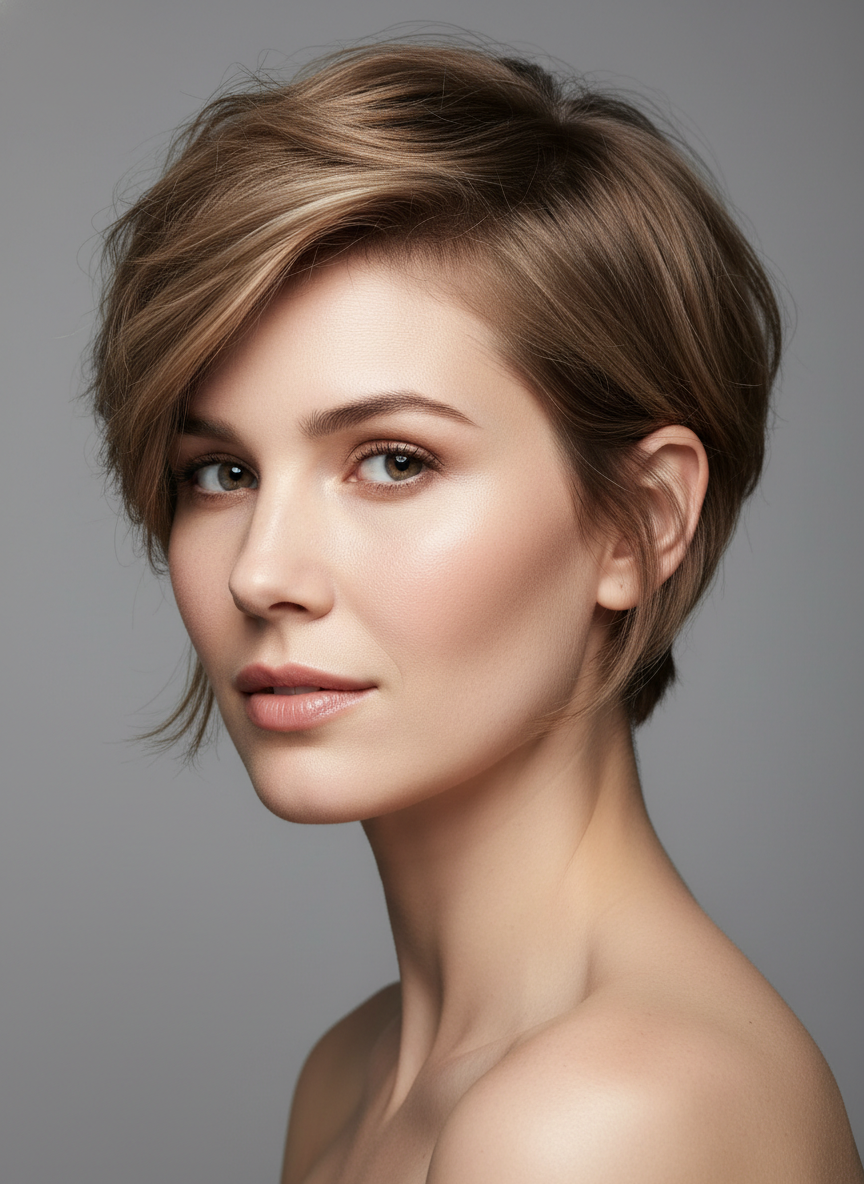
A bixie cut is a short haircut that blends the cropped shape of a pixie with the softness and movement of a bob. It usually has longer layers than a classic pixie, shorter length than a bob, and face-framing texture around the ears, neck, and crown.
Private photo upload, fast AI hairstyle preview, stylist-friendly reference images.
Definition
What Is a Bixie Cut?
A bixie cut is a hybrid haircut that borrows the cropped feel of a pixie and the softer movement of a bob. It is not one fixed cut, but a family of short pixie-bob shapes built around soft layers, face-framing pieces, and a shaped neckline.
Best for
Short hair with movement, soft texture, and a pixie-bob shape
Hair type
Straight, wavy, fine, medium, thick, or curly hair with adjusted layering
Maintenance
Medium; short layers need trims and light styling to keep shape
Style vibe
Chic, modern, playful, low-length but softer than a pixie
Best length
Around the ears, jaw, nape, or just below the cheekbones
Styling need
Texture cream, round brush, diffuser, matte paste, or light hairspray
Features
Key Features of a Bixie Cut
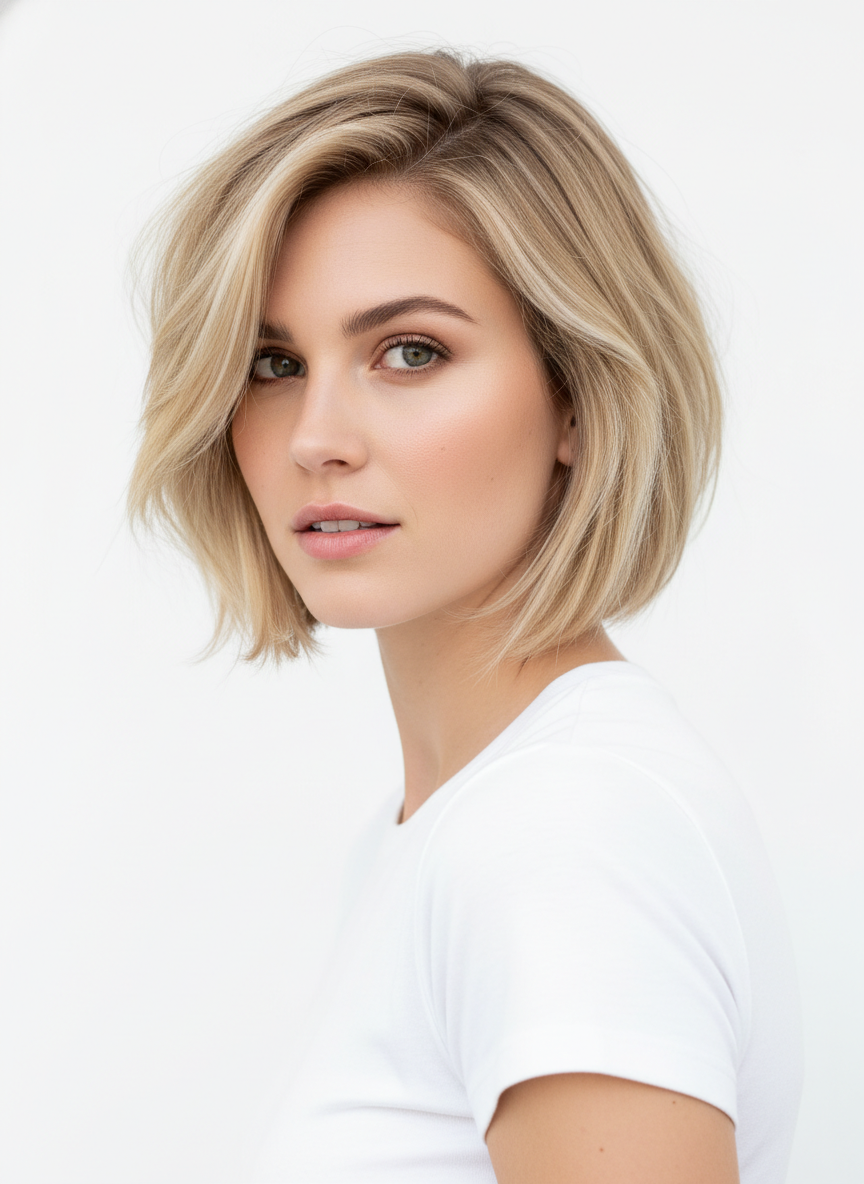
A bixie cut is defined by how it balances pixie shape with bob softness. The crown, face frame, layers, and nape all work together to make the cut feel short but not severe.
Length
Shorter than most bobs but usually longer than a classic pixie, sitting around the ears, jaw, nape, or just below the cheekbones.
Layers
Uses soft, blended layers to avoid a helmet-like short shape and to keep the cut feeling light and modern.
Face frame
Longer front pieces can soften cheekbones, jawline, or forehead depending on where the shortest face-framing layer starts.
Crown
Light volume at the crown gives the cut movement and shape, especially when paired with a soft styling product.
Nape
The neckline can be tapered, softly stacked, or left slightly longer depending on how clean or soft you want the back to read.
Styling
Usually needs light product or blow-drying to keep the texture visible; it is rarely a true wash-and-go cut.
Ideas
Bixie Cut Haircut Ideas
Use these bixie cut ideas as visual references for your stylist or as starting points for an AI hairstyle preview. Each card covers a different version, from classic to curly to fine hair.
bixie cut
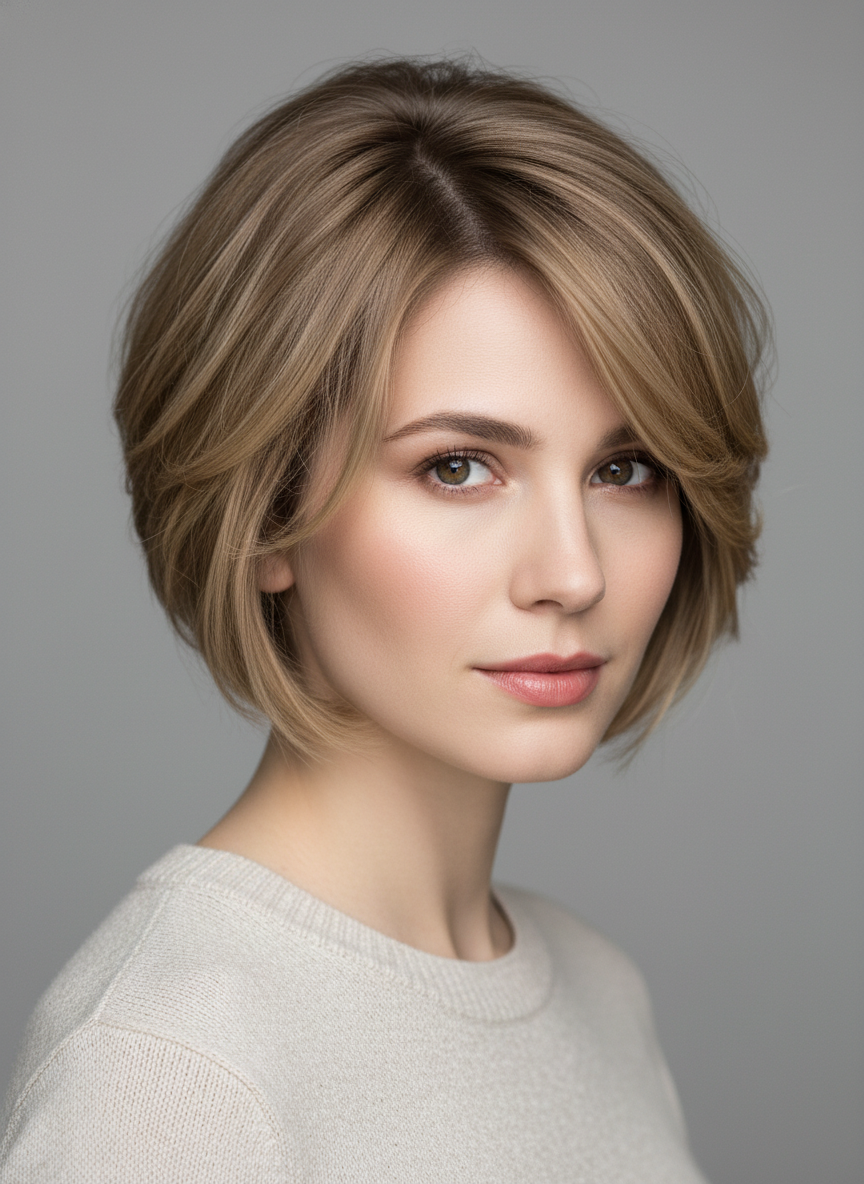
Classic Bixie Cut
The classic bixie cut blends pixie-short shape with bob-like softness. It keeps enough length around the sides and neckline to feel feminine and flexible, while the crown and face-framing layers make the haircut lighter than a traditional short bob.
Best for: First time trying a bixie cut
Maintenance: Medium
short bixie cut
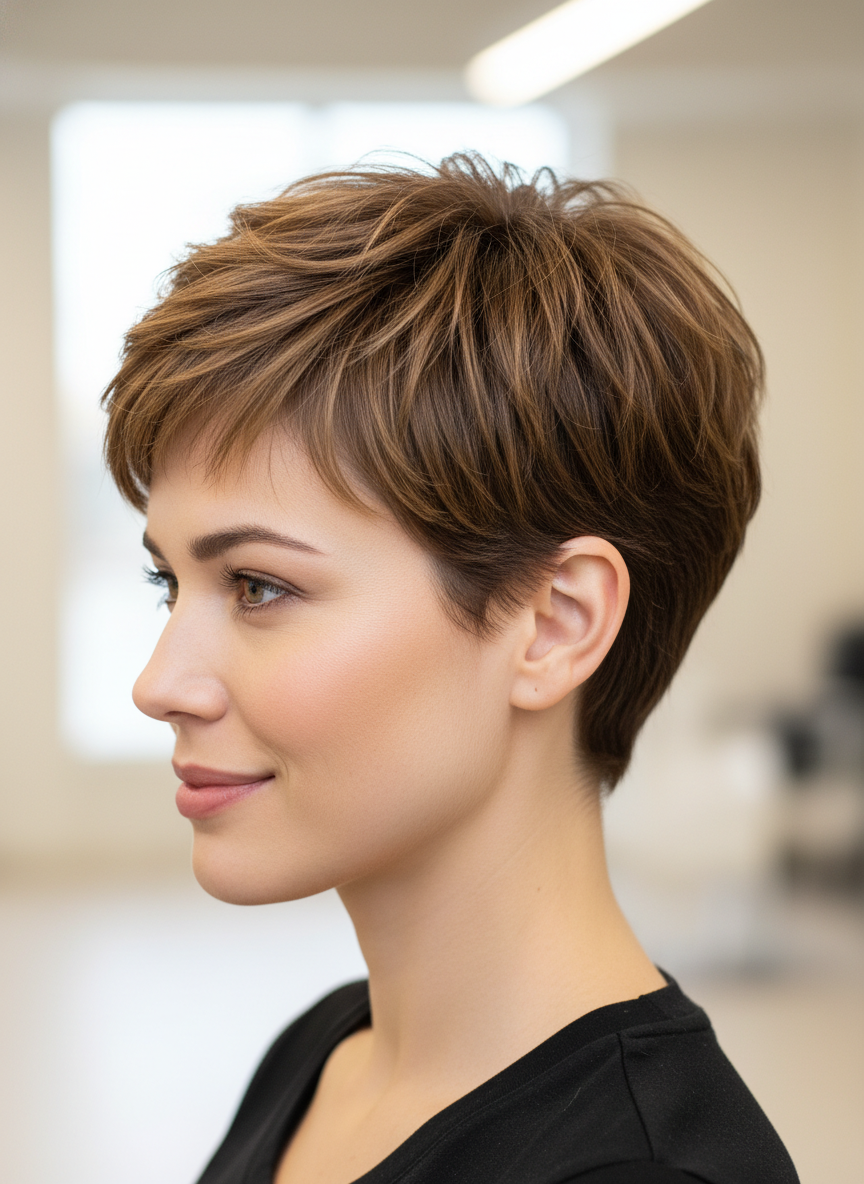
Short Bixie Cut
A short bixie cut sits closer to a pixie, with cropped sides, a shaped nape, and short layers through the crown. It is fresh and lightweight, but it needs precise trimming so the haircut does not lose its silhouette.
Best for: A fresher, more pixie-leaning shape
Maintenance: Medium to high
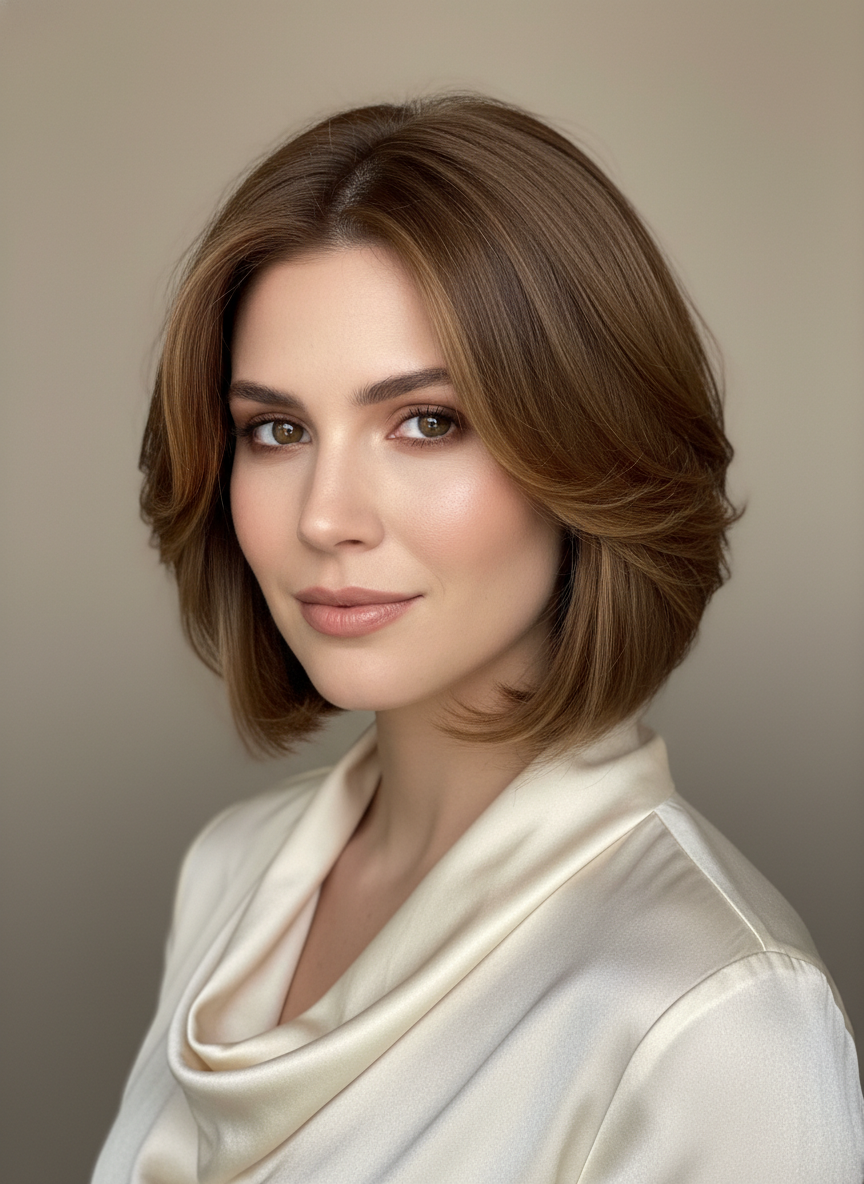
long bixie cut
Long Bixie Cut
A long bixie cut keeps more length around the ears, jaw, and nape, making it a lower-risk version for first-time short-hair users. It still has pixie-like layering, but the extra length makes it easier to tuck, wave, or grow out.
Best for: A lower-risk first short haircut
Maintenance: Low to medium
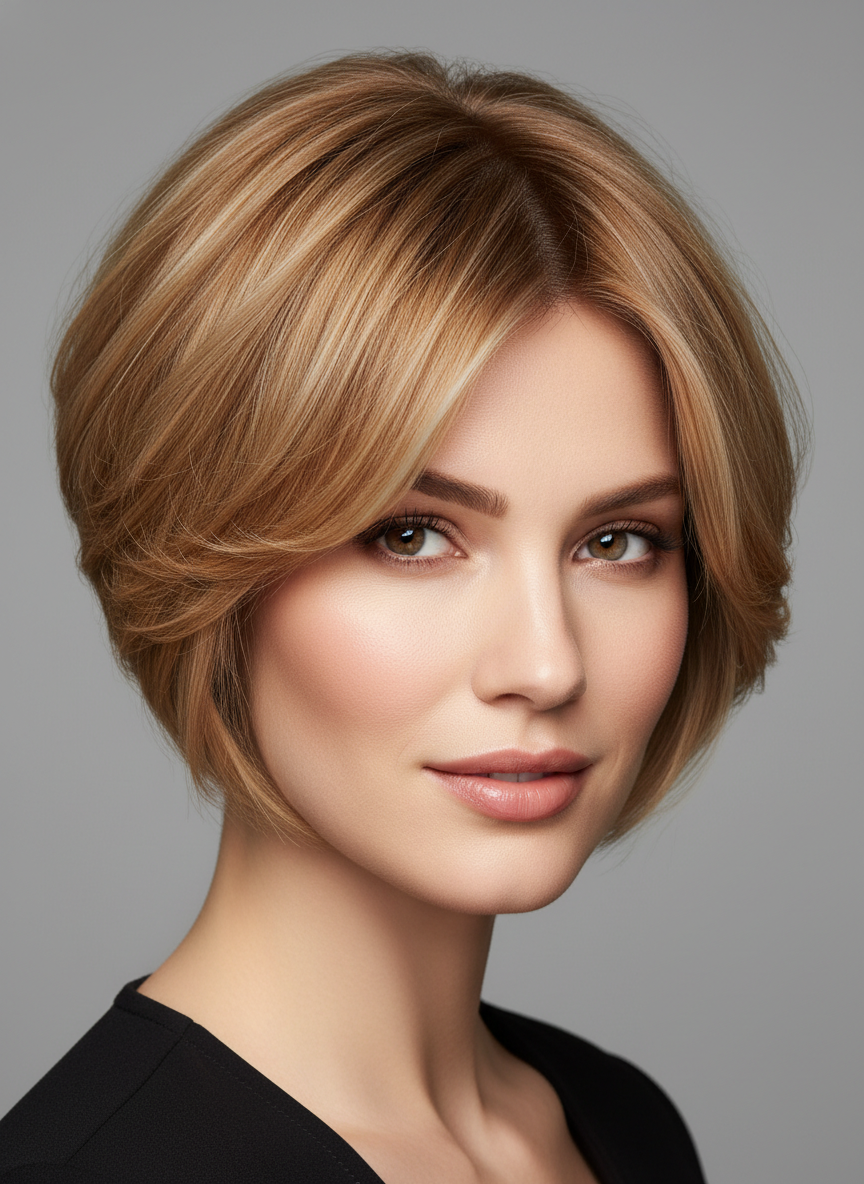
layered bixie cut
Layered Bixie Cut
A layered bixie cut uses blended short layers to create movement through the crown, sides, and neckline. This version works well when the goal is texture and volume rather than a blunt, compact short bob shape.
Best for: Volume, texture, and a lighter short shape
Maintenance: Medium
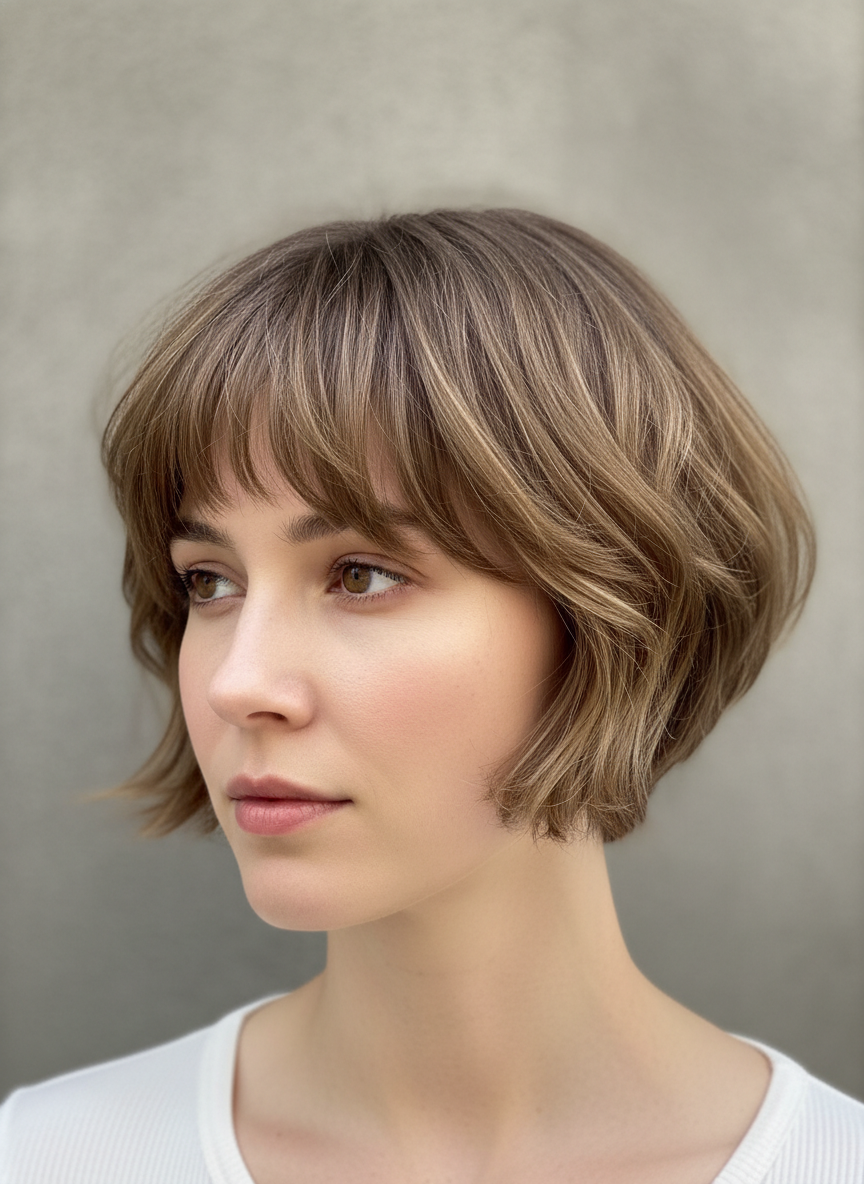
bixie cut with bangs
Bixie Cut With Bangs
A bixie cut with bangs adds fringe to the pixie-bob shape. The bangs can be wispy, side-swept, curtain-like, or choppy, but they need regular trims so they blend with the short layers instead of looking disconnected.
Best for: Softening the forehead or framing the eyes
Maintenance: High
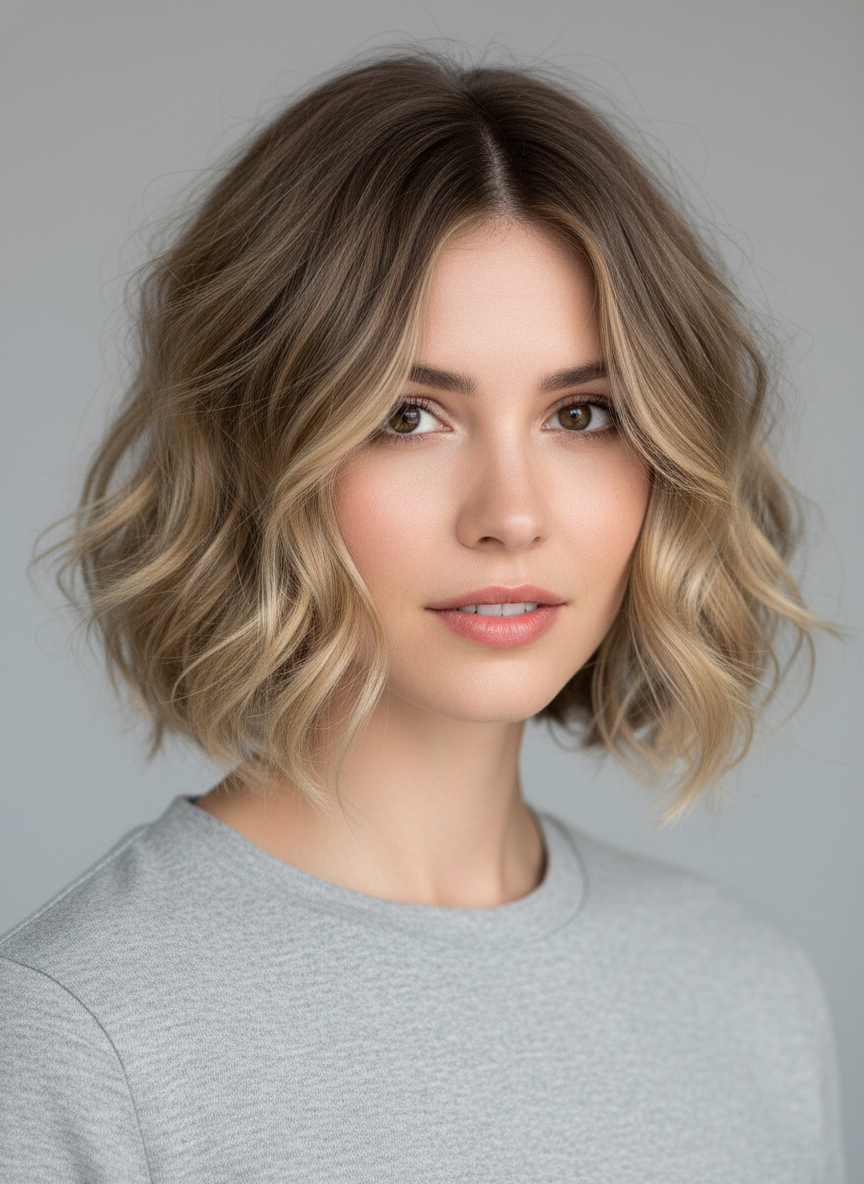
wavy bixie cut
Wavy Bixie Cut
A wavy bixie cut uses natural bends to show off the short layers. It works especially well when the stylist keeps enough length for waves to form, while removing bulk around the nape and sides.
Best for: Natural bends and effortless movement
Maintenance: Medium
curly bixie cut
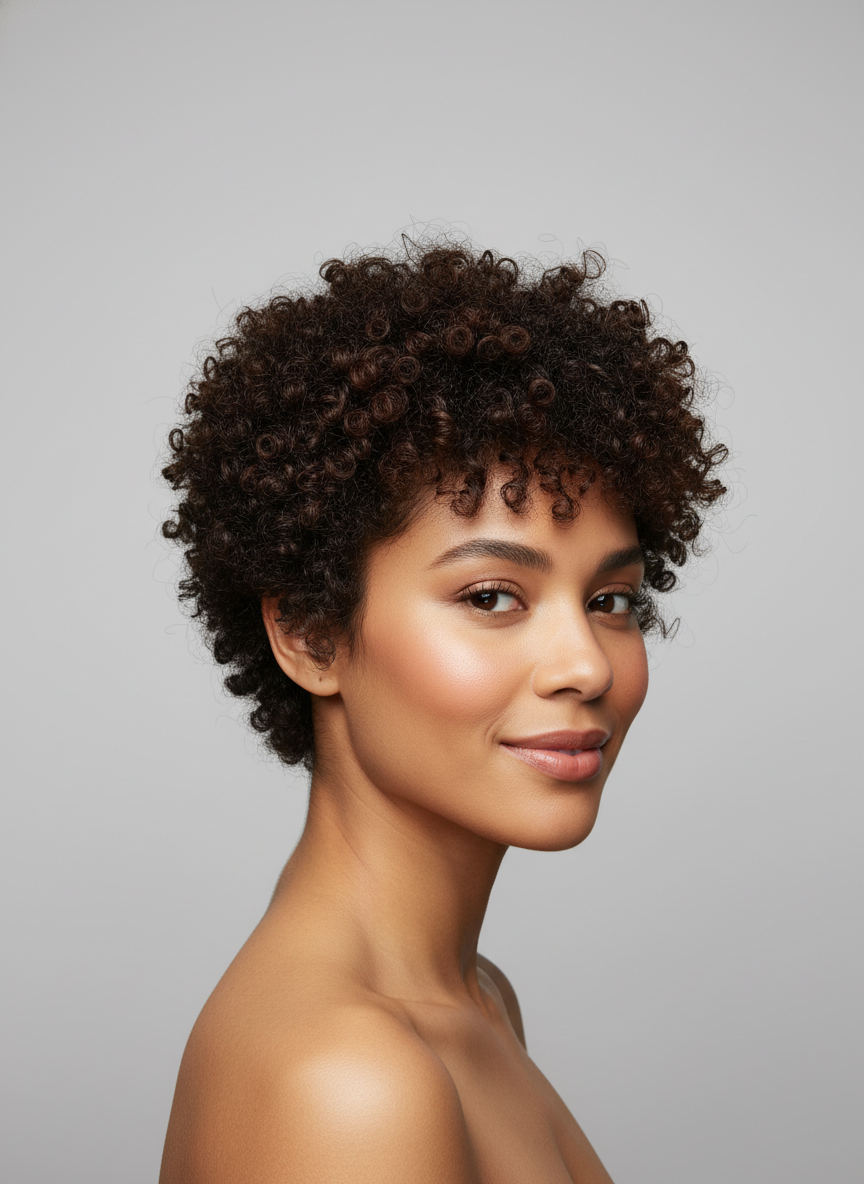
Curly Bixie Cut
A curly bixie cut adapts the pixie-bob shape to curl pattern and shrinkage. The layers should be cut with curl behavior in mind so the style keeps shape without becoming too wide, uneven, or triangular after drying.
Best for: Naturally curly hair with rounded shape
Maintenance: Medium to high
bixie cut for fine hair
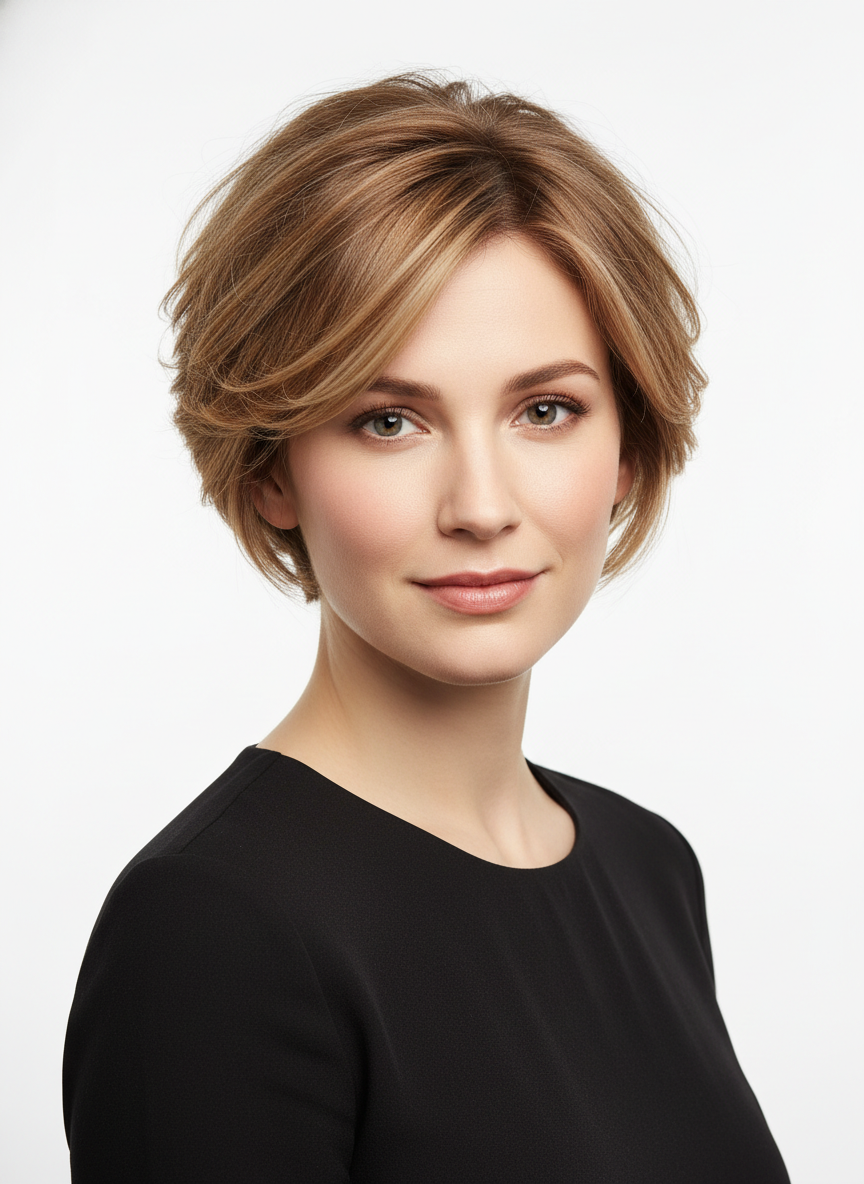
Bixie Cut for Fine Hair
A bixie cut can work well for fine hair when the layers stay soft and the outline remains full. Too many short layers can make fine hair look sparse, so this version should keep density around the sides and use light texture on top.
Best for: Soft volume without thin-looking ends
Maintenance: Medium
bixie cut for thick hair
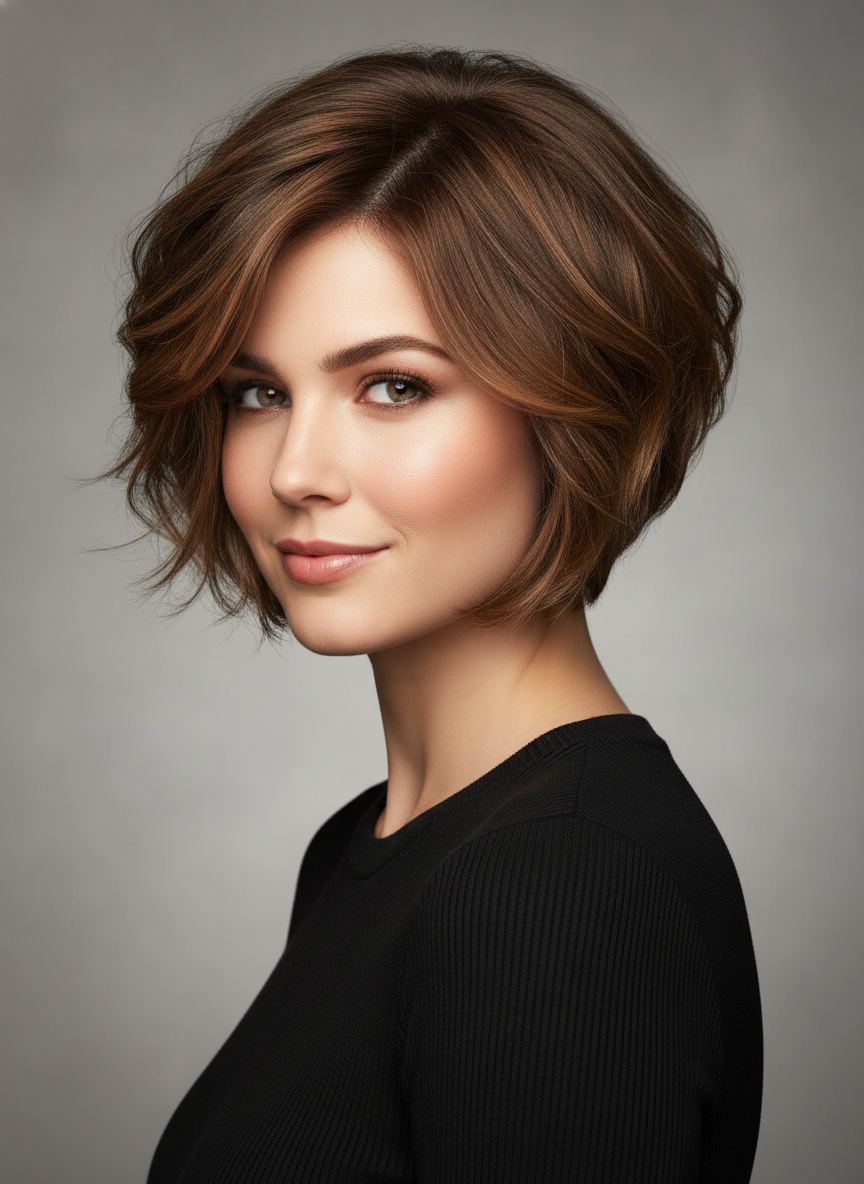
Bixie Cut for Thick Hair
A bixie cut for thick hair removes weight through controlled layering while keeping the short shape polished. The stylist should reduce bulk around the sides and nape without cutting so many layers that the shape becomes choppy.
Best for: Reducing weight while keeping shape
Maintenance: Medium
Hair type
Bixie Cut by Hair Type
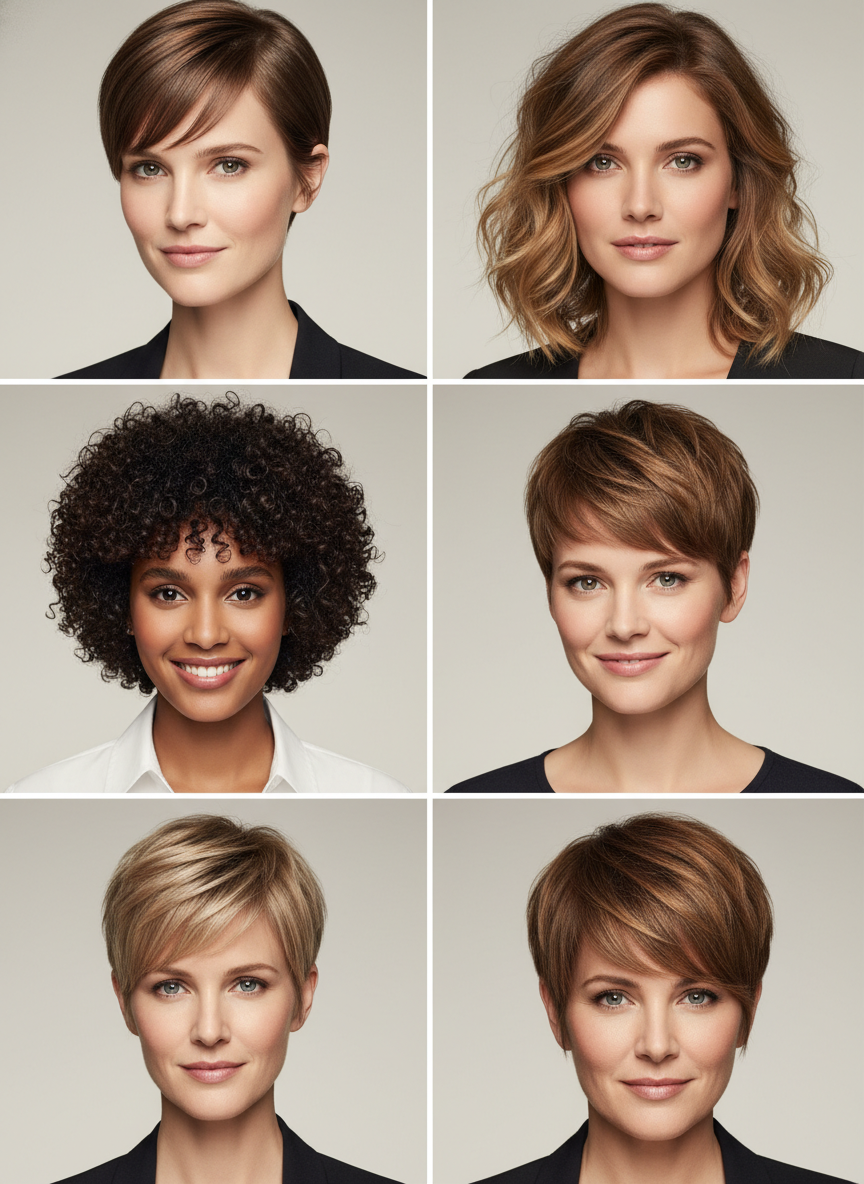
The same bixie cut reads very differently on straight, wavy, curly, fine, and thick hair. Use this table to match the cut to your hair density and texture before booking a salon visit.
Straight hair
Works well with clean shaping, soft layering, and light texture product to keep the pixie-bob outline visible.
Wavy hair
Often a strong match because natural bends make the short layers more visible and the silhouette more dynamic.
Curly hair
Needs curl-aware layering and shrinkage planning; avoid cutting the crown too short so the shape stays balanced.
Fine hair
Keep the sides and perimeter full and use subtle layers for lift, instead of aggressive short layering.
Thick hair
Remove weight around the nape and sides while preserving the pixie-bob silhouette and avoiding a choppy finish.
Coarse hair
Use controlled layering and smoothing products so the shape stays intentional rather than wide or unruly.
Fit
Who Does a Bixie Cut Suit?
A bixie cut suits people who want short hair with more softness and movement than a pixie, but less length and weight than a bob. The best version depends on face shape, hair density, curl pattern, and how much daily styling the person wants.
Oval
Most versions work; choose length based on how short you want to go and how much you want to maintain.
Round
Add crown height and keep side volume controlled so the cut lengthens the face instead of widening it.
Square
Use soft face-framing layers around the jaw to balance a strong jawline without softening the cut too much.
Heart
Try side-swept bangs or cheekbone-length pieces to balance a wider forehead and draw attention down.
Long
Avoid too much height; keep some fullness around the sides so the face does not look longer than it is.
Diamond
Keep soft pieces around cheekbones and avoid overly sharp side volume that exaggerates narrow features.
Should You Get a Bixie Cut?
Good choice if...
- You want short hair but not an ultra-short pixie cut.
- You like texture, movement, and face-framing pieces.
- You are willing to trim the shape regularly.
- You want a cut that can look polished or tousled.
Think twice if...
- You want a pure wash-and-go one-length bob.
- You dislike short layers around the ears and nape.
- Your hair grows out quickly and you do not want frequent trims.
- You expect AI previews to guarantee the salon result exactly.
Comparison
Bixie Cut vs Similar Short Haircuts
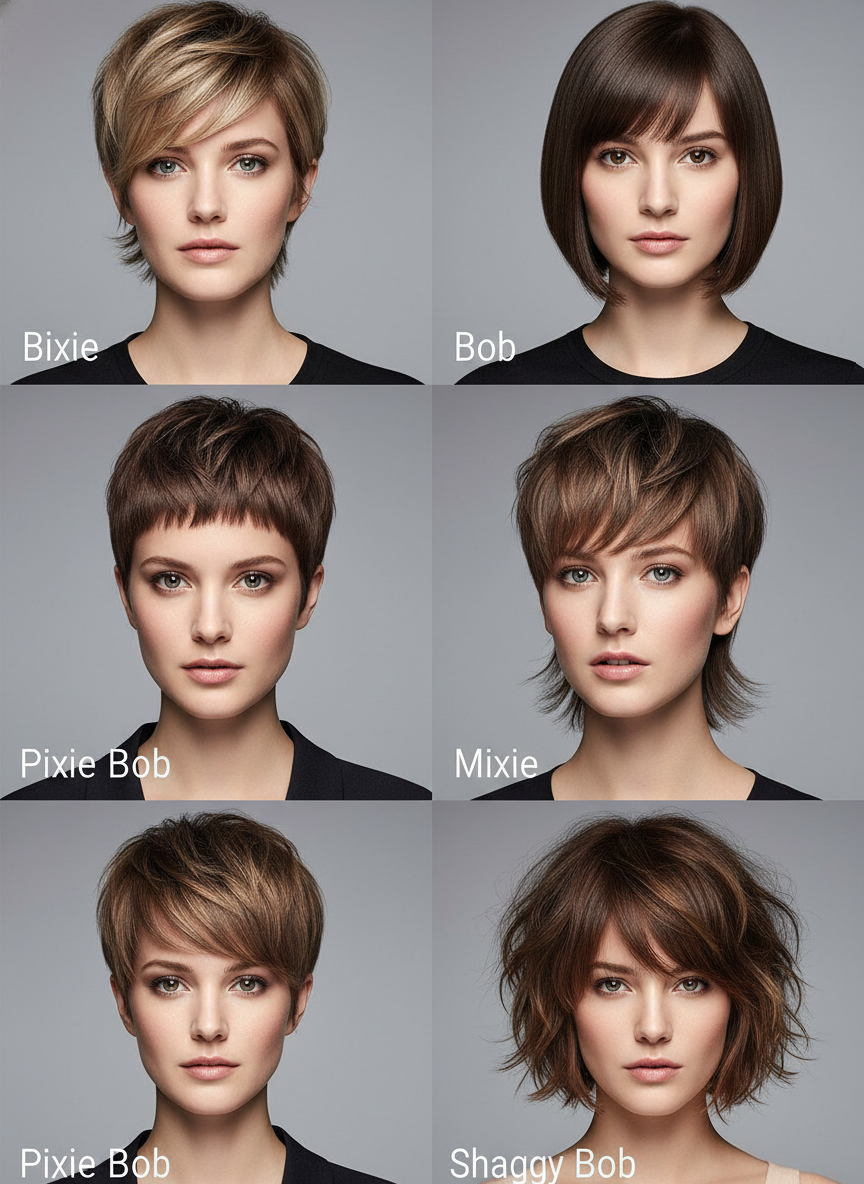
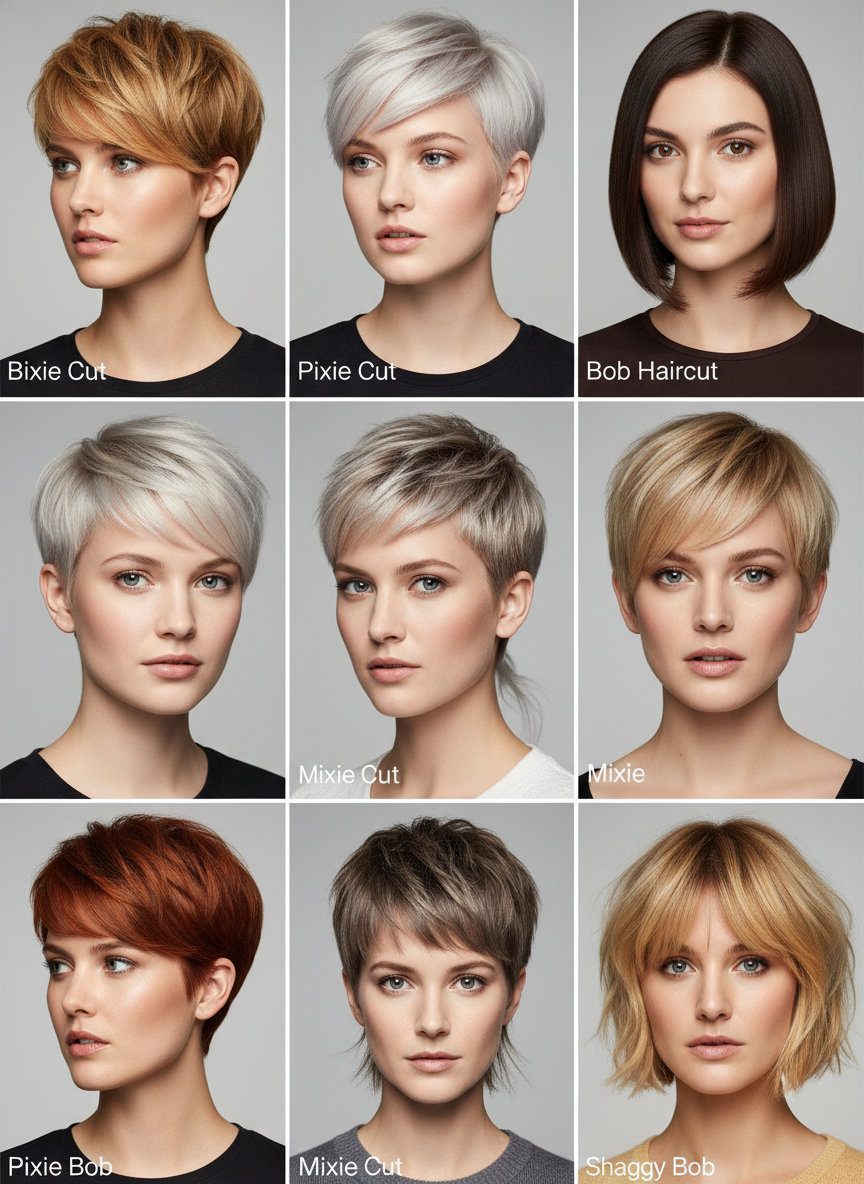
People often compare the bixie cut with pixie cuts, bobs, pixie bobs, mixie cuts, and shaggy bobs. The difference comes down to length, layering, nape shape, and how much weight the cut keeps.
Bixie Cut
Hybrid of pixie and bob with short layers and bob-like softness around the sides and nape.
Short hair with movement and shape that still feels light.
Pixie Cut
Shorter, more cropped, and often more exposed around the ears and nape than a bixie cut.
Bold, low-length short hair with a strong cropped feel.
Bob
Longer, usually heavier, and often cleaner around the perimeter than a bixie cut.
Polished short-to-medium hair with a stronger outline.
Pixie Bob
Very close to a bixie cut; often used as a more descriptive salon term for the same hybrid shape.
Users explaining the cut clearly to a stylist.
Mixie Cut
Pixie mixed with mullet, usually shaggier and longer at the back than a bixie cut.
Edgier, more rebellious texture and back length.
Shaggy Bob
More undone and choppy, usually less cropped than a bixie cut and more layered through the body.
Messy, layered bob movement with extra undone texture.
Choose a bixie cut if you want something shorter and lighter than a bob but softer and longer than a classic pixie. If you want a more dramatic short crop, choose a pixie; if you want more length and polish, choose a bob.
Talk to your stylist
How to Ask a Stylist for a Bixie Cut
Bring a clear reference and a few length and styling decisions so your stylist can match the cut to your face shape and hair density. Use the script below as a starting point.
Say it to your stylist
I want a bixie cut, somewhere between a pixie and a bob. Please keep soft layers, some length around the sides, and a shaped neckline. I want texture and movement, but not an ultra-short pixie.
1. Overall length
Ear-length, jaw-length, nape-length, or a longer bixie depending on how short you want to go.
2. Bangs
None, wispy bangs, side-swept bangs, curtain fringe, or choppy bangs.
3. Nape shape
Soft nape, tapered nape, stacked nape, or a longer neckline depending on the back look.
4. Texture
Sleek, soft, piecey, messy, wavy, or curly depending on your hair and styling routine.
5. Volume
Crown lift, flat and sleek, or a rounded shape depending on face shape and preference.
6. Maintenance
Decide between low daily styling or salon-polished styling so the cut matches your routine.

Bring Reference Images
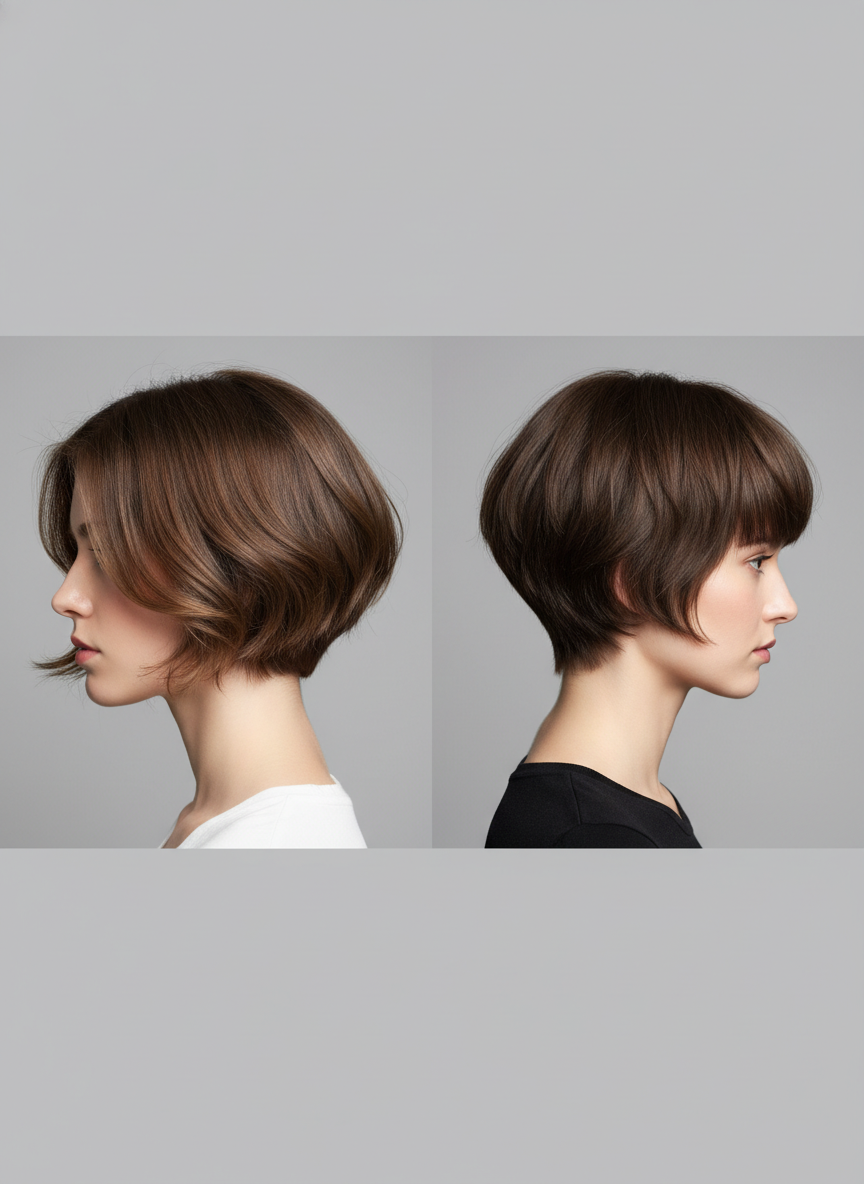
Bring 2-3 reference images showing both the front and the side profile of the bixie cut version you want.
Choose Overall Length
Decide between ear-length, jaw-length, nape-length, or a longer bixie so the stylist can plan the silhouette.
Set Bangs Decision
Pick no bangs, wispy bangs, side-swept bangs, curtain fringe, or choppy bangs to control how the face frame reads.
Plan the Nape Shape
Choose a soft, tapered, stacked, or longer neckline so the back matches how short or soft you want the cut.
Define Texture and Volume
Tell the stylist whether you want sleek, soft, piecey, messy, wavy, or curly texture and how much crown height you need.
Share Daily Styling Habits
Be honest about how much daily styling you will realistically do, so the cut matches your routine.
Styling
How to Style and Maintain a Bixie Cut
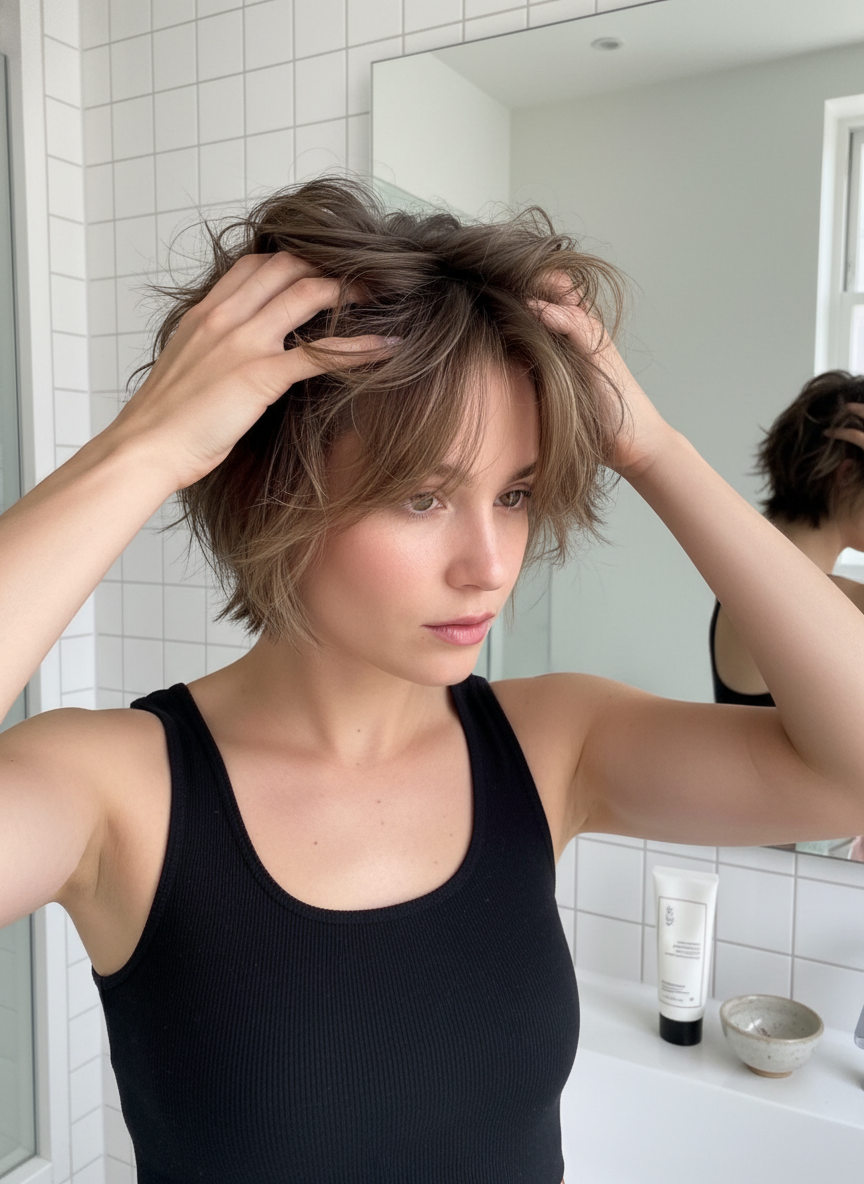
A bixie cut looks best when the layers around the face and nape have light texture and the crown has a small amount of movement. A texture cream, round brush, or diffuser is usually enough to keep the shape intentional.
Prep the Hair
Start with towel-dried hair or refresh dry hair with a light mist so the layers can be reshaped.
Apply Texture Product
Work a small amount of texture cream, mousse, or matte paste through the short layers for grip.
Blow-Dry or Diffuse
Blow-dry the crown for lift or use a diffuser on curls to preserve the natural pixie-bob shape.
Separate With Fingers
Use your fingers to separate the layers around the face, ears, and nape so the texture reads.
Finish Lightly
Finish with a light hairspray or texture spray to keep movement without making the cut stiff.
Trim Every 4-6 Weeks
Short bixie shapes rely on regular trims, so plan a cleanup every 4-6 weeks to keep the silhouette intentional.
Short bixie cuts rely on regular trims. Long bixie cuts are easier to grow out. Fine hair should avoid heavy products. Thick hair should plan for periodic weight removal so the sides do not expand.
AI try-on
Try Bixie Cut Online Before You Cut
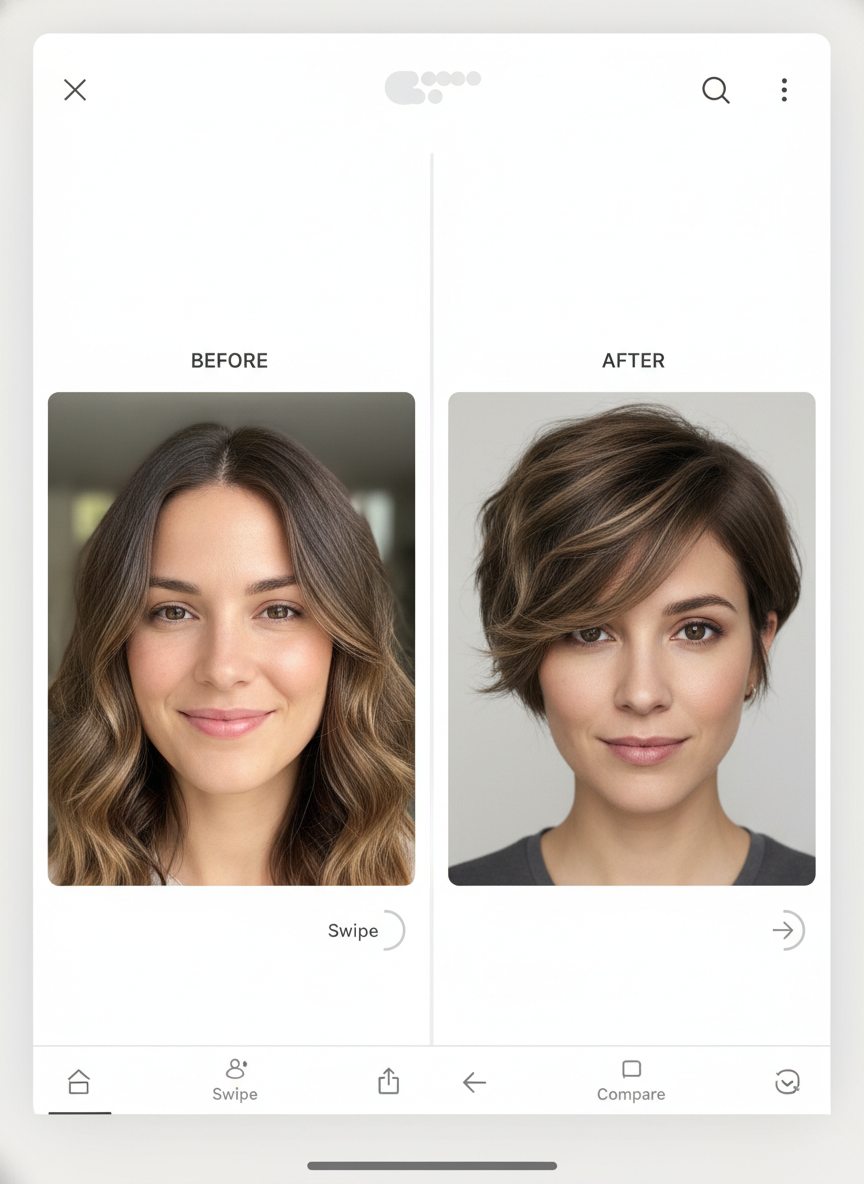
Not sure if a bixie cut will suit your face, hairline, or styling routine? Try it online first. Upload a selfie and compare classic, short, long, wavy, curly, and bangs versions before visiting a stylist.
Upload a Selfie
Use a clear front-facing selfie with your current hair visible around the face, ears, and neckline.
Choose Bixie Cut
Compare classic, short, long, wavy, curly, and bangs versions of the bixie cut on your own face.
Generate Preview
Create an AI bixie cut preview before you book a real haircut or change your length in a salon.
Save as Stylist Reference
Use the preview to show your stylist the exact length, layers, nape, and bangs direction you want.
Mistakes
Common Bixie Cut Mistakes
The biggest bixie cut mistake is asking for the name without clarifying length, bangs, layer placement, and styling routine. Use the issues below as a checklist before and after your salon visit.
- Asking for a bixie cut without bringing any reference photos.
- Cutting the nape too short when the user actually wanted a softer, bob-like shape.
- Adding too many short layers to fine hair and making the ends look sparse.
- Leaving thick hair too bulky around the sides and crown.
- Choosing bangs without planning how often they will need to be trimmed.
- Expecting an AI preview to perfectly match the final salon result.
Bring reference images and explain how much texture, movement, and daily styling you actually want. The more specific you are, the closer the final result will match your AI preview.
FAQ About the Bixie Cut Haircut
Related ideas
Related Short Haircut Ideas
Explore nearby short haircut intents and try-on paths without leaving the AI hairstyle preview flow.
A-Line Bob
Compare a structured shorter-back, longer-front bob shape with a softer bixie cut.
AI Hairstyle Try-On
Upload a selfie and preview bixie cut variations before visiting a stylist.
Short Bob
Try a compact, chin-length short bob if the bixie cut feels too cropped.
Butterfly Bob
See how a layered, face-framing bob differs from a cropped bixie cut.
Generate a Bixie Cut Preview
Upload your photo and preview a bixie cut with TryHairNow AI before visiting a stylist. Compare classic, short, long, wavy, curly, and bangs versions so your final salon reference is clearer.
- Private photo upload
- Fast AI hairstyle preview
Last updated: 2026-06-04 · Publisher: TryHairNow · AI hairstyle previews are reference images, not guaranteed salon outcomes. Bring reference photos to your stylist and confirm length, bangs, layer placement, nape shape, hair density, and daily styling needs before cutting.