Curtain Bangs: Face-Framing Hair Ideas and AI Try-On
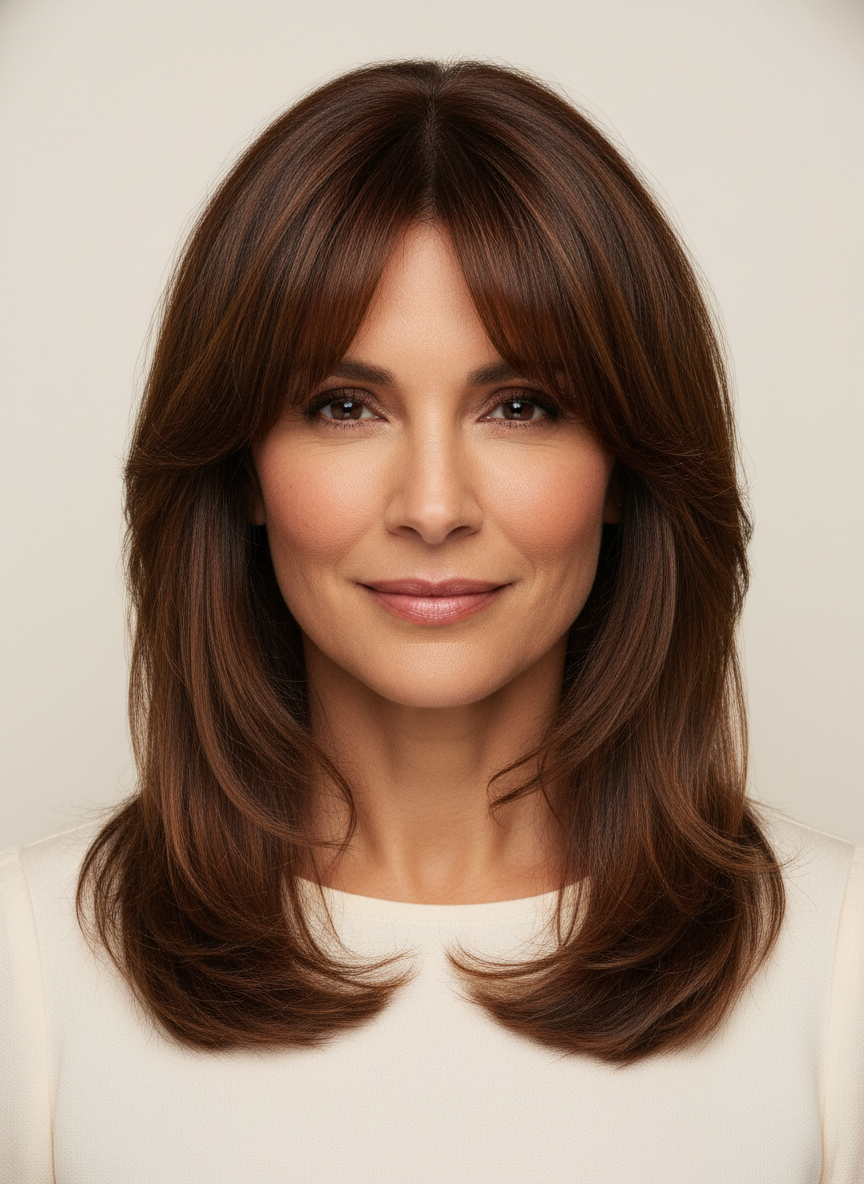
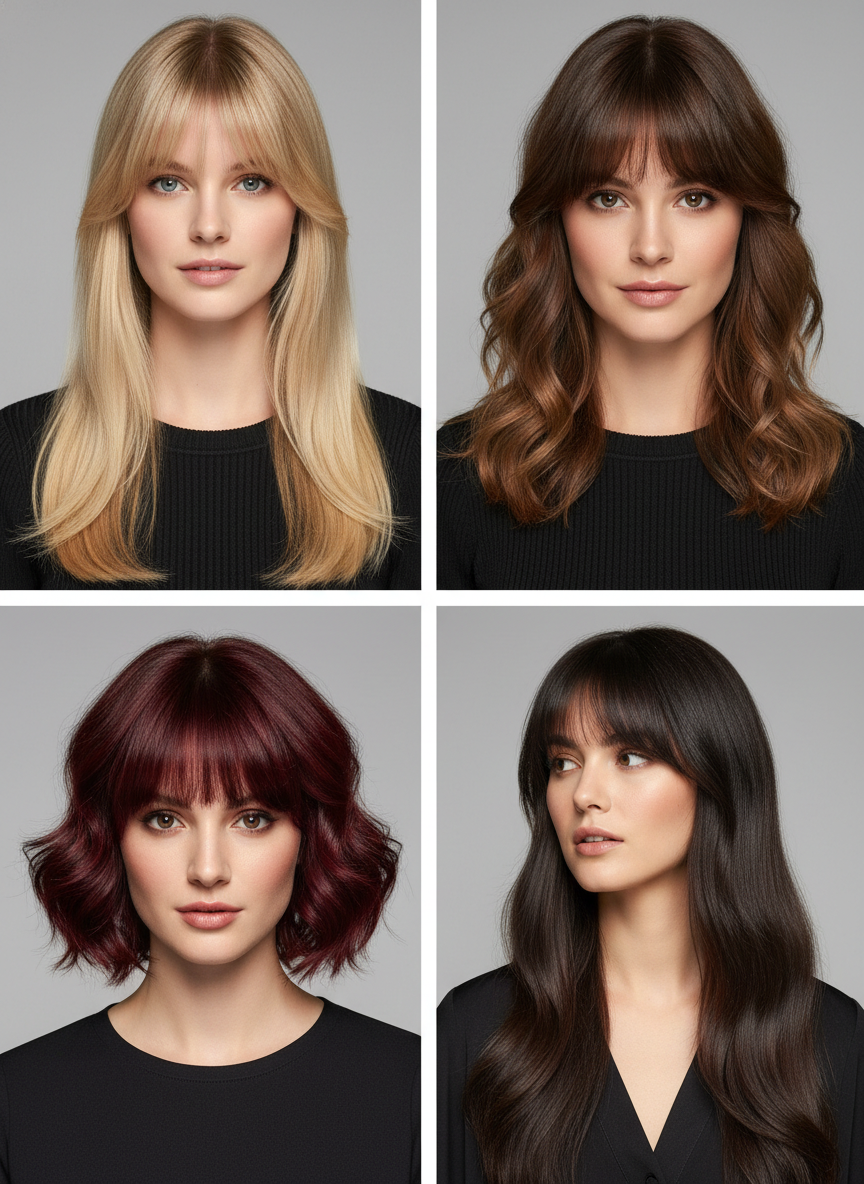
Curtain bangs are parted bangs that open from the center or slightly off-center, framing both sides of the face like soft curtains. They are usually longer than blunt bangs, blend into face-framing layers, and can work with long hair, bobs, lobs, waves, and many face shapes.
Definition
What Are Curtain Bangs?
Curtain bangs are defined by how they part and frame the face. The center or off-center part lets the bangs open on both sides of the forehead, blending into face-framing layers that fall toward the cheekbones, jaw, or chin.
Best for
Soft, face-framing, low-commitment bangs with movement
Hair type
Straight, wavy, fine, medium, or softly textured hair with enough length to blend
Maintenance
Low to medium; trims every 8-10 weeks keep the curtain shape clean
Style vibe
Soft, retro, romantic, easygoing, and modern
Shape
Key Features of Curtain Bangs
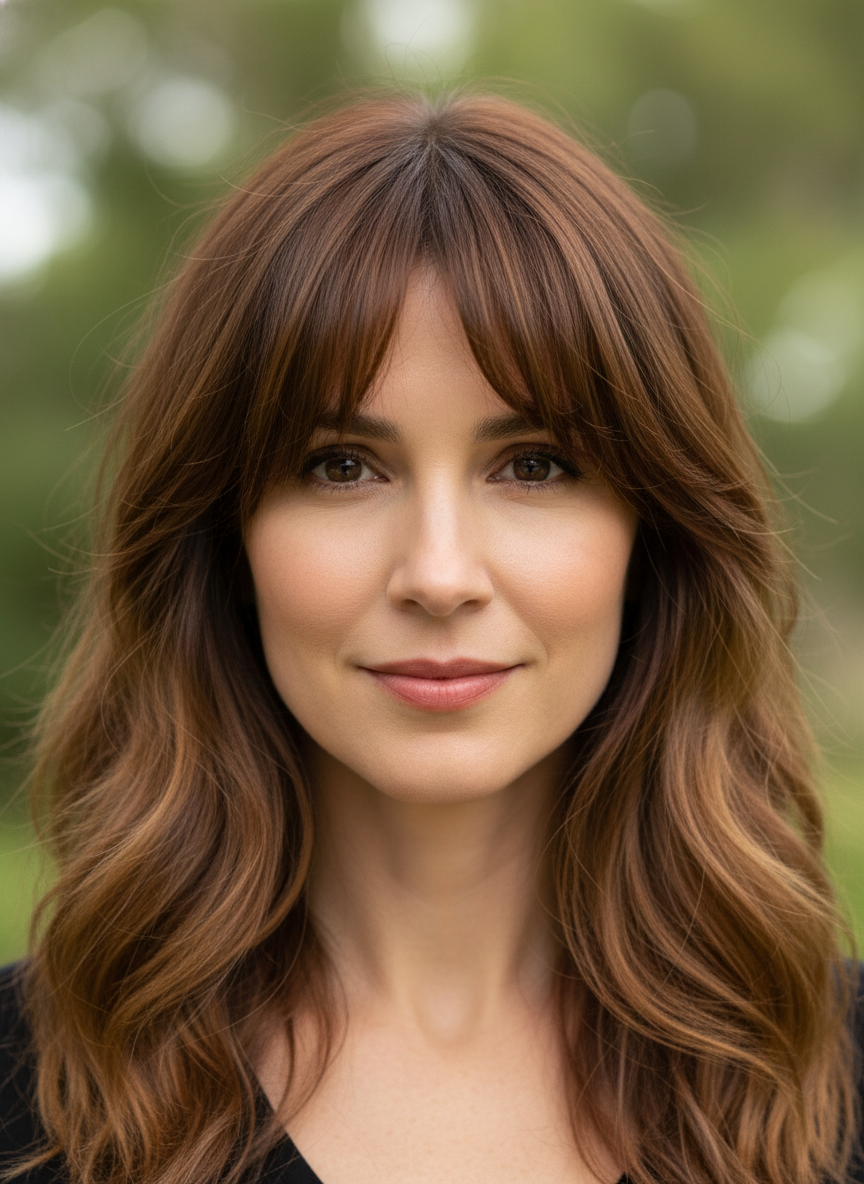
Curtain bangs are best understood by how they open. The center or off-center part is the headline, but the length, blend, and styling all change how soft or dramatic they look.
Parting
A center or slightly off-center part lets the bangs fall open on both sides of the face.
Length
Curtain bangs are usually longer than blunt bangs, often reaching the cheekbones, jaw, or chin.
Blend
They should blend smoothly into face-framing layers on both sides so the haircut feels connected.
Density
Most curtain bangs are softly thinned or wispy so they feather into the rest of the hair rather than sitting as a solid block.
Texture
Curtain bangs work with straight, wavy, or lightly curly hair and tend to look more natural with a little bend.
Styling
The goal is a soft, swept-apart finish, not a perfectly straight-across bang or heavy fringe.
Ideas
Curtain Bangs Ideas
Use these curtain bang ideas as stylist references or as starting points for an AI hairstyle preview. Each card maps to a common curtain bangs search intent.
curtain bangs
Classic Curtain Bangs
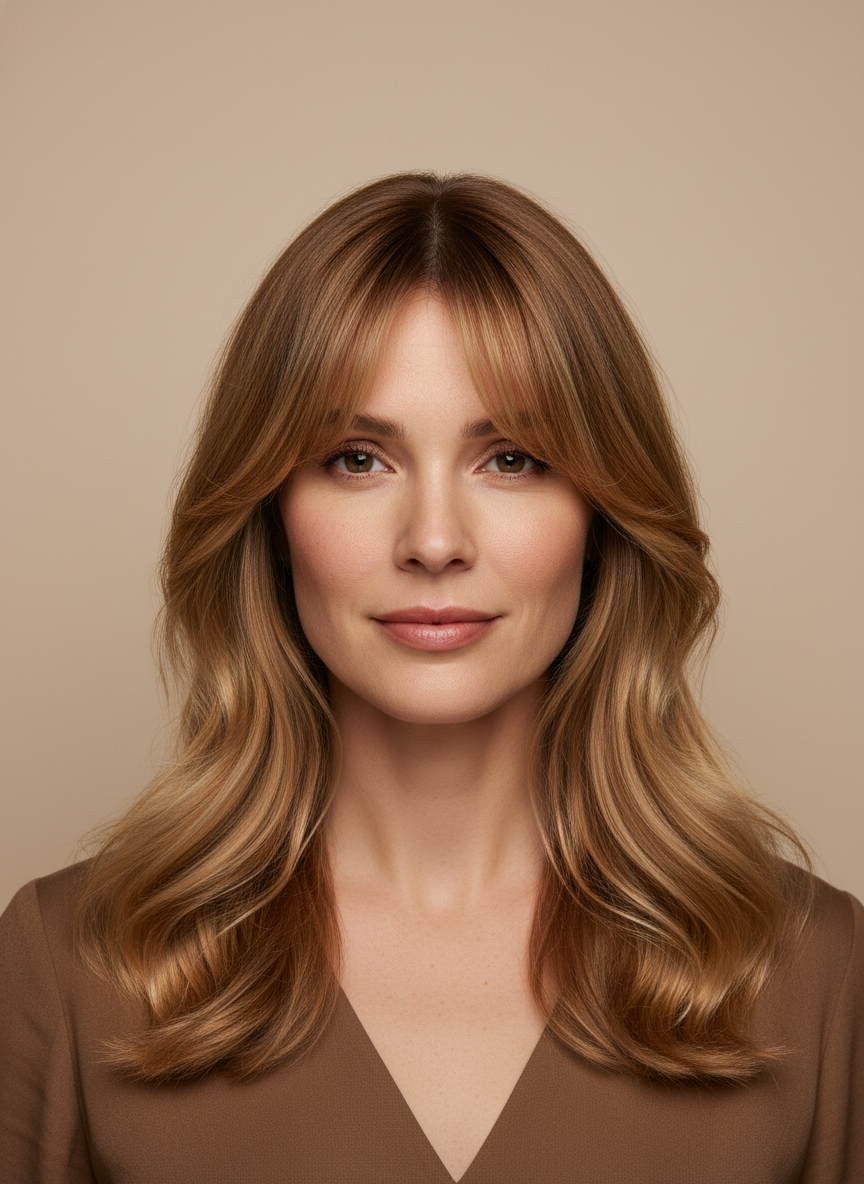
Classic curtain bangs part gently from the center and fall to the cheekbones. They are the safest way to try bangs because they grow out softly and blend into the rest of the haircut.
Best for: First-time bangs
Maintenance: Low to medium
long curtain bangs
Long Curtain Bangs
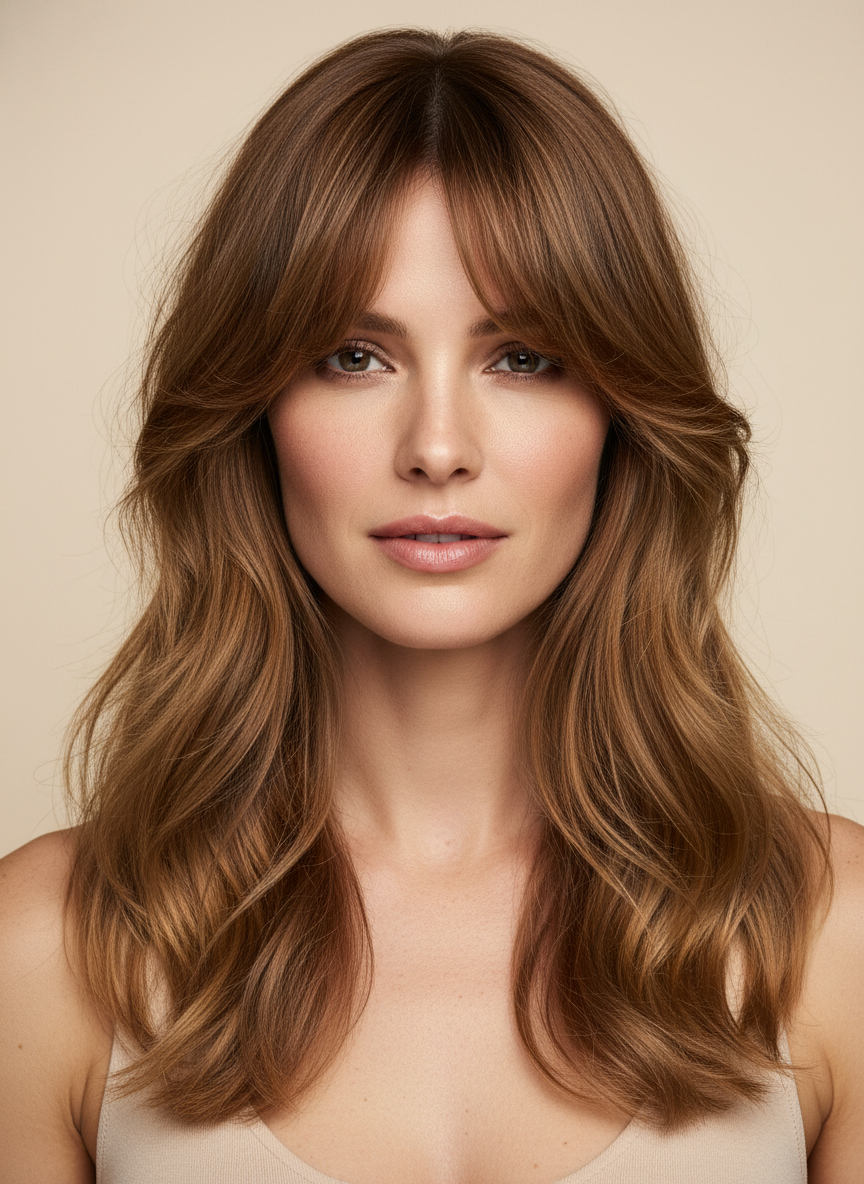
Long curtain bangs drop past the cheekbones toward the jaw or chin, blending into longer layers. They are the easiest to grow out and the friendliest option for first-time bangs.
Best for: Low-risk first cut
Maintenance: Low
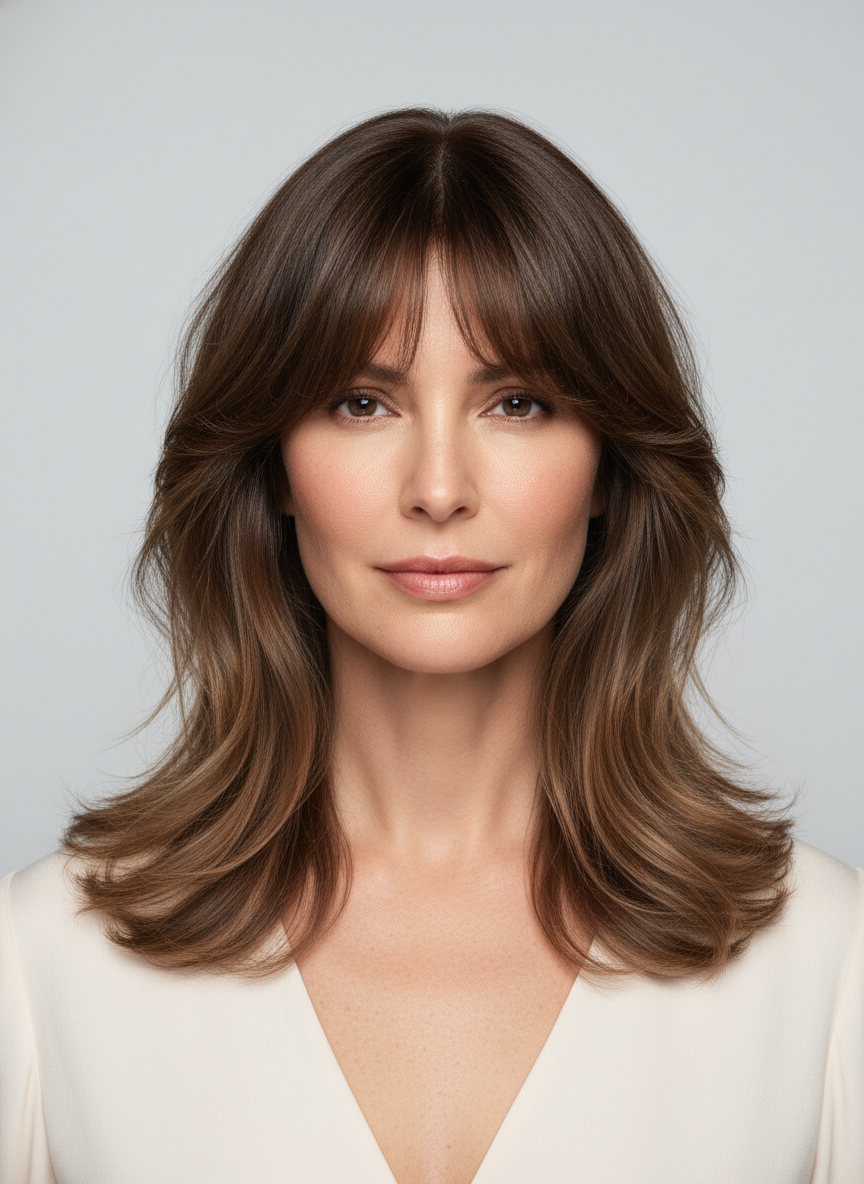
wispy curtain bangs
Wispy Curtain Bangs
Wispy curtain bangs are thinned out for a light, airy finish. They are great for fine hair and for anyone who wants bangs without the heaviness of a blunt fringe.
Best for: Soft, airy fringe
Maintenance: Low to medium
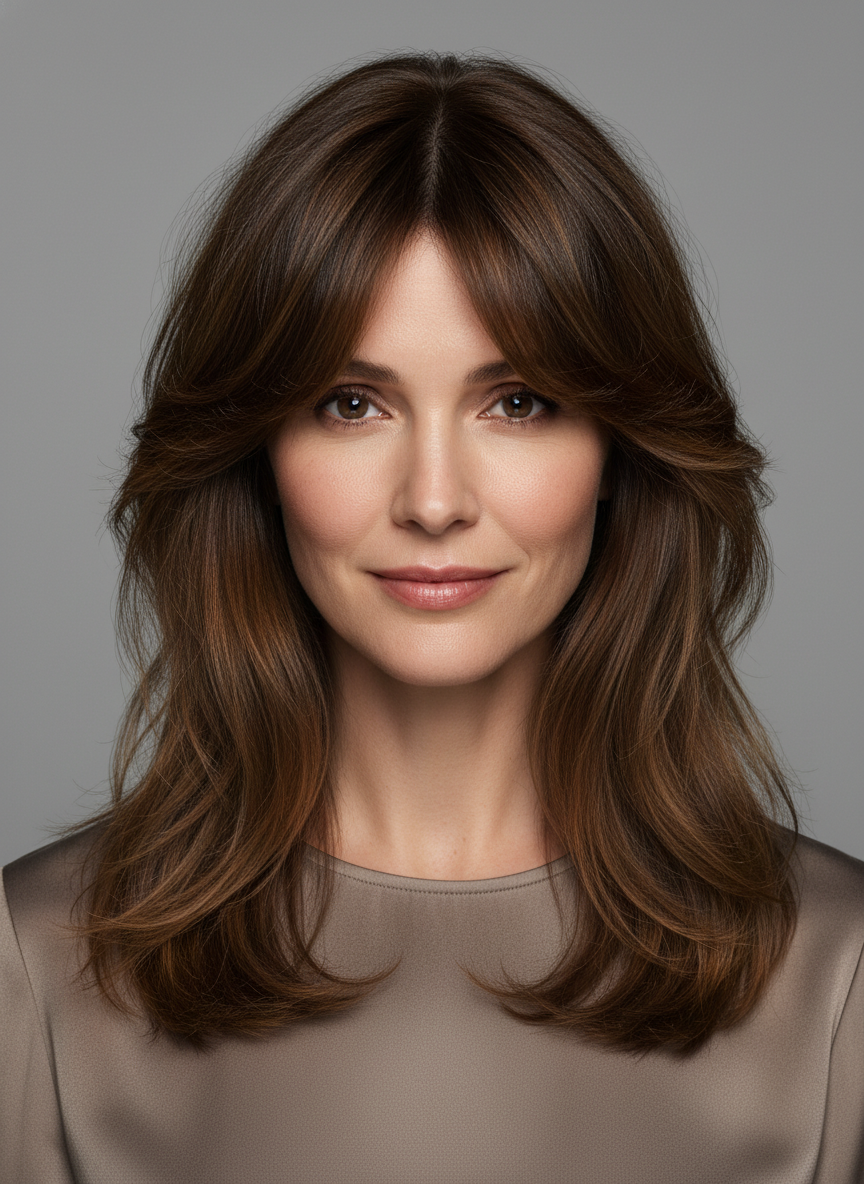
curtain bangs with layers
Curtain Bangs With Layers
Curtain bangs with layers blend the bangs into longer face-framing pieces that move with the rest of the haircut. It is one of the most wearable combinations for long or medium hair.
Best for: Movement around the face
Maintenance: Medium
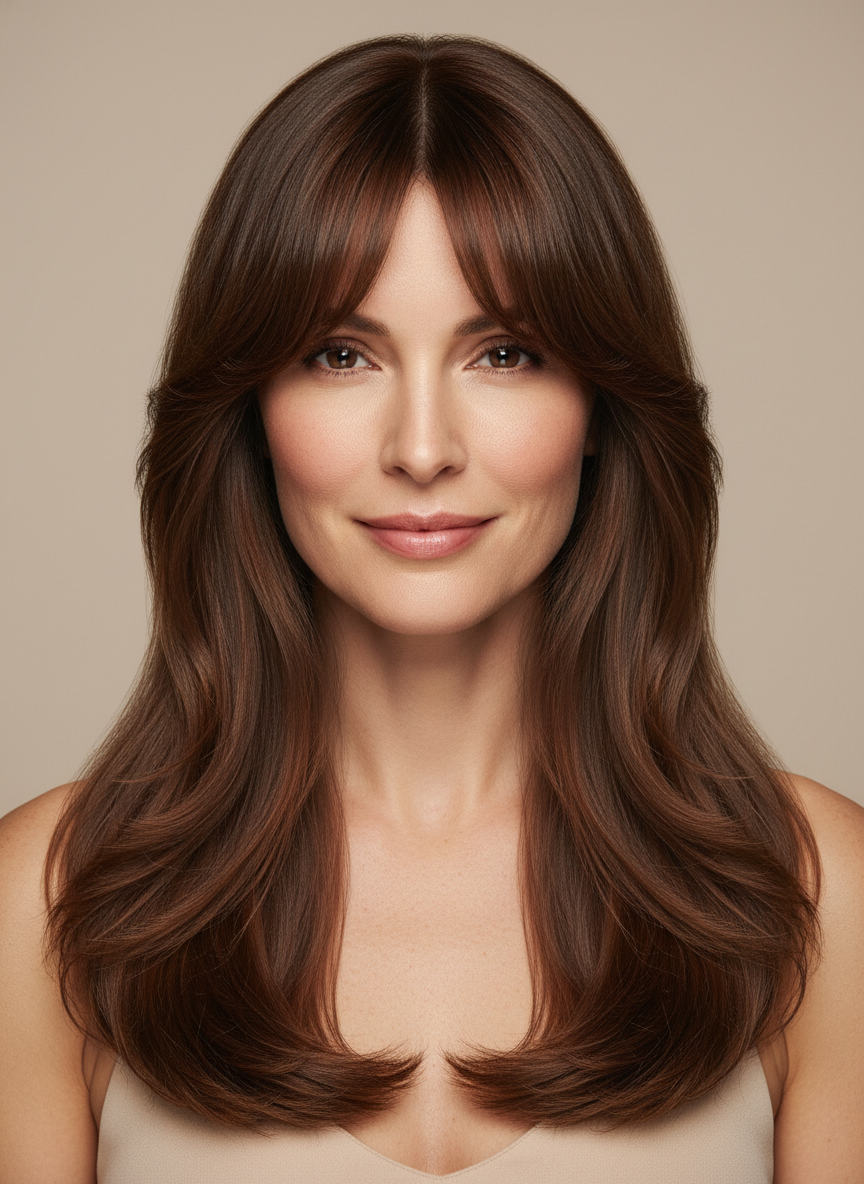
curtain bangs long hair
Curtain Bangs Long Hair
Curtain bangs on long hair open at the center and blend into long, flowing layers. They create a clear face frame without shortening the overall length of the haircut.
Best for: Long layered hair
Maintenance: Low to medium
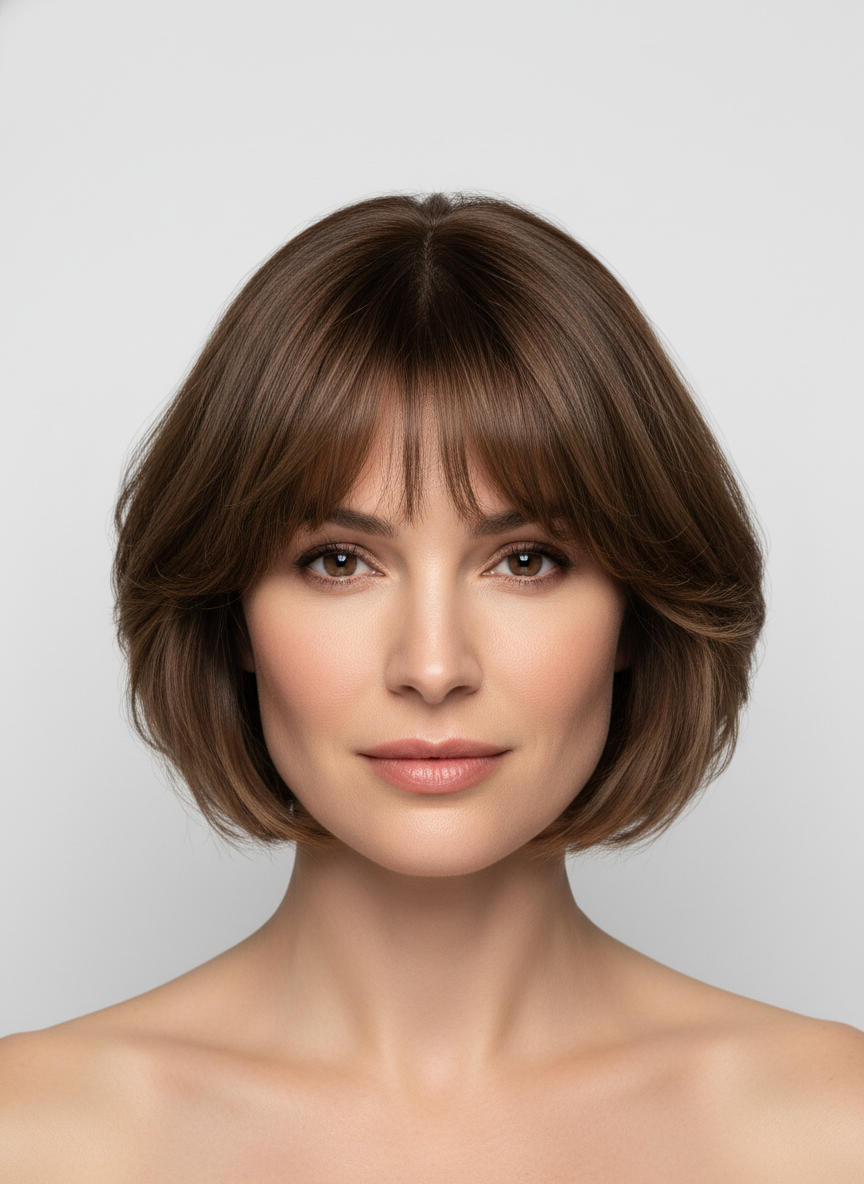
curtain bangs bob
Curtain Bangs Bob
Pairing curtain bangs with a short bob creates a face-framing, retro-feeling look. Keep the bangs longer so they blend into the bob sides instead of creating a heavy, blunt front.
Best for: Short bob users
Maintenance: Medium
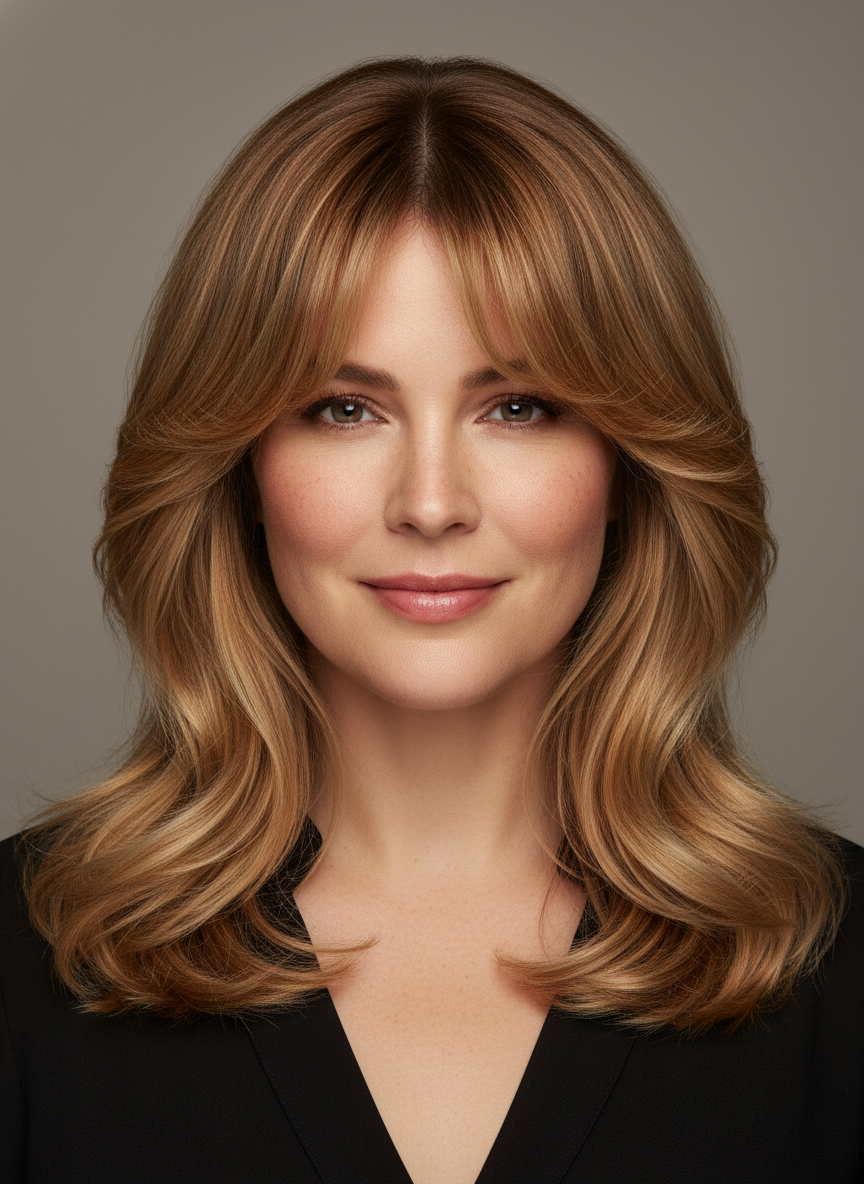
curtain bangs round face
Curtain Bangs Round Face
Curtain bangs on a round face open at the center and drop past the cheekbones, creating vertical lines that visually lengthen the face. Avoid short, blunt bangs that stop above the cheeks.
Best for: Face-lengthening effect
Maintenance: Low to medium
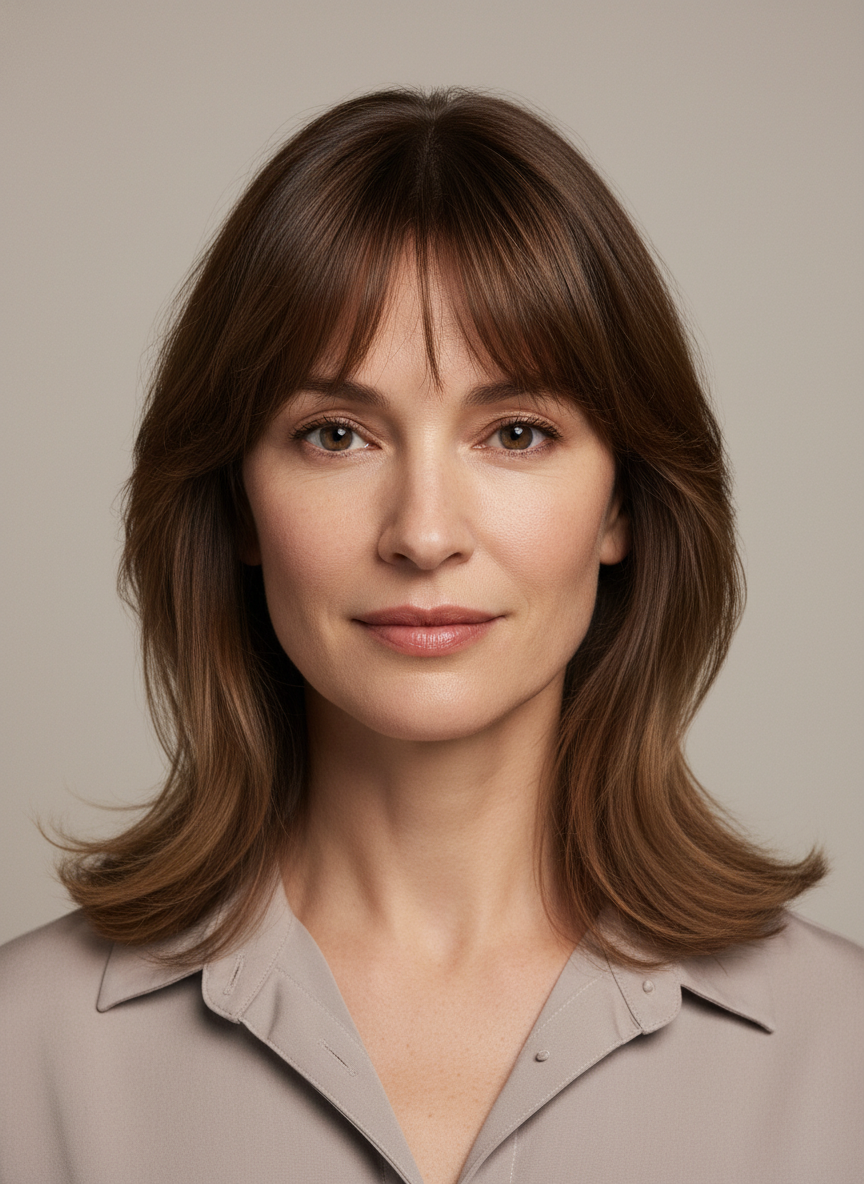
curtain bangs fine hair
Curtain Bangs Fine Hair
Curtain bangs for fine hair should be kept soft, wispy, and well-blended so the bangs do not look thin. Avoid heavy, blunt bangs that expose the scalp or sit too flat.
Best for: Soft fringe without thinning
Maintenance: Low to medium
Fit
Who Do Curtain Bangs Suit?
Curtain bangs are one of the most versatile bang types. The best version depends on face shape, hair density, natural texture, and how much daily styling you want to do.
Oval faces
Almost all curtain bang lengths and parts work. Choose the length and center-vs-off-center part based on your style preference.
Round faces
Longer curtain bangs that drop past the cheekbones help lengthen the face. Avoid short, blunt bangs that stop above the cheeks.
Square faces
Soft, swept curtain bangs soften a strong jaw better than blunt, straight-across bangs.
Heart faces
Curtain bangs that fall past the cheekbones balance a wider forehead and draw attention away from a narrow chin.
Long faces
Shorter curtain bangs that hit at the cheekbones add horizontal width and break up the length of the face.
Should You Try It?
Good choice if...
- You want bangs that grow out softly without a hard line.
- You like a face-framing, romantic shape with movement.
- You want bangs that can work straight, wavy, or air-dried.
- You are willing to do a small amount of daily styling to set the part.
Think twice if...
- You want a hard, blunt, straight-across bang.
- You dislike any daily styling or product at the front.
- Your hair is extremely curly or coily without daily heat or straightening.
- You have a strong cowlick at the center of your hairline that fights a clean part.
Comparison
Curtain Bangs vs Similar Bangs
Curtain bangs searches often overlap with blunt bangs, side-swept bangs, wispy bangs, and birkin bangs. The main difference is the part and the way the bangs blend into the rest of the haircut.
Curtain Bangs
Center or off-center part with bangs that open on both sides of the face.
Soft, face-framing bangs that grow out easily.
Blunt Bangs
A straight, even line of bangs cut across the forehead with no part.
A graphic, high-impact fringe.
Side-Swept Bangs
Bangs that sweep to one side instead of opening at the center.
Soft asymmetry and one-sided face framing.
Wispy Bangs
Thin, airy bangs that can be cut straight-across or parted.
A light, low-density fringe for fine hair.
Birkin Bangs
A heavier, slightly blunt fringe with a subtle center part, often with brow-grazing length.
A fuller, more vintage curtain-inspired fringe.
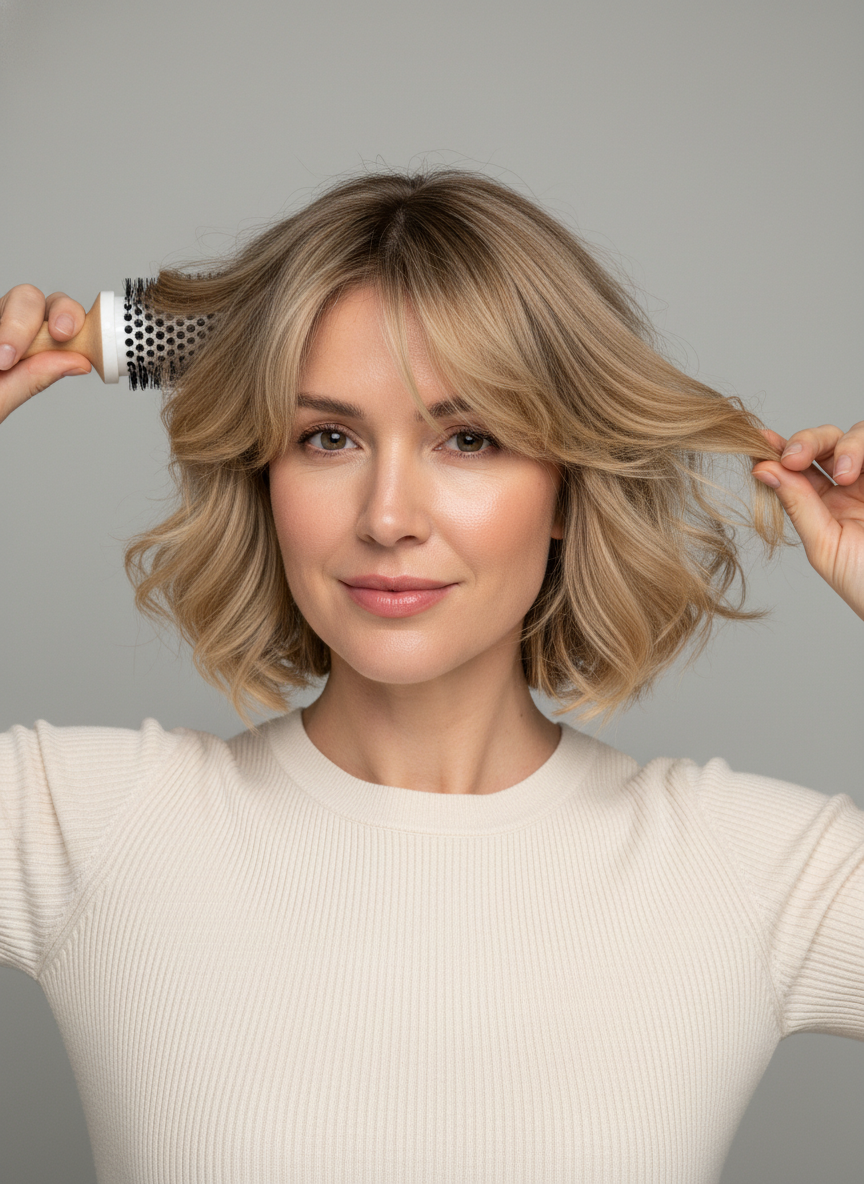
Styling
How to Style and Maintain Curtain Bangs
Curtain bangs do not need a lot of effort, but a small routine keeps the part clean, the length in place, and the bangs blending with the rest of the hair.
Set the Part While Damp
Blow-dry the bangs away from the center with a small round brush so the curtain part forms naturally as the hair dries.
Smooth the Sides of the Bangs
Pull the side pieces slightly forward and down so they curve toward the cheekbones and jaw rather than flipping out.
Use a Light-Hold Product
Finish with a small amount of mousse, cream, or light hairspray to keep the part in place without making the bangs stiff.
Trim Every 8-10 Weeks
Book light trims to keep the curtain length where you want it. The bangs will grow into longer face-framing pieces between trims.
AI try-on
Try Curtain Bangs Online Before You Cut
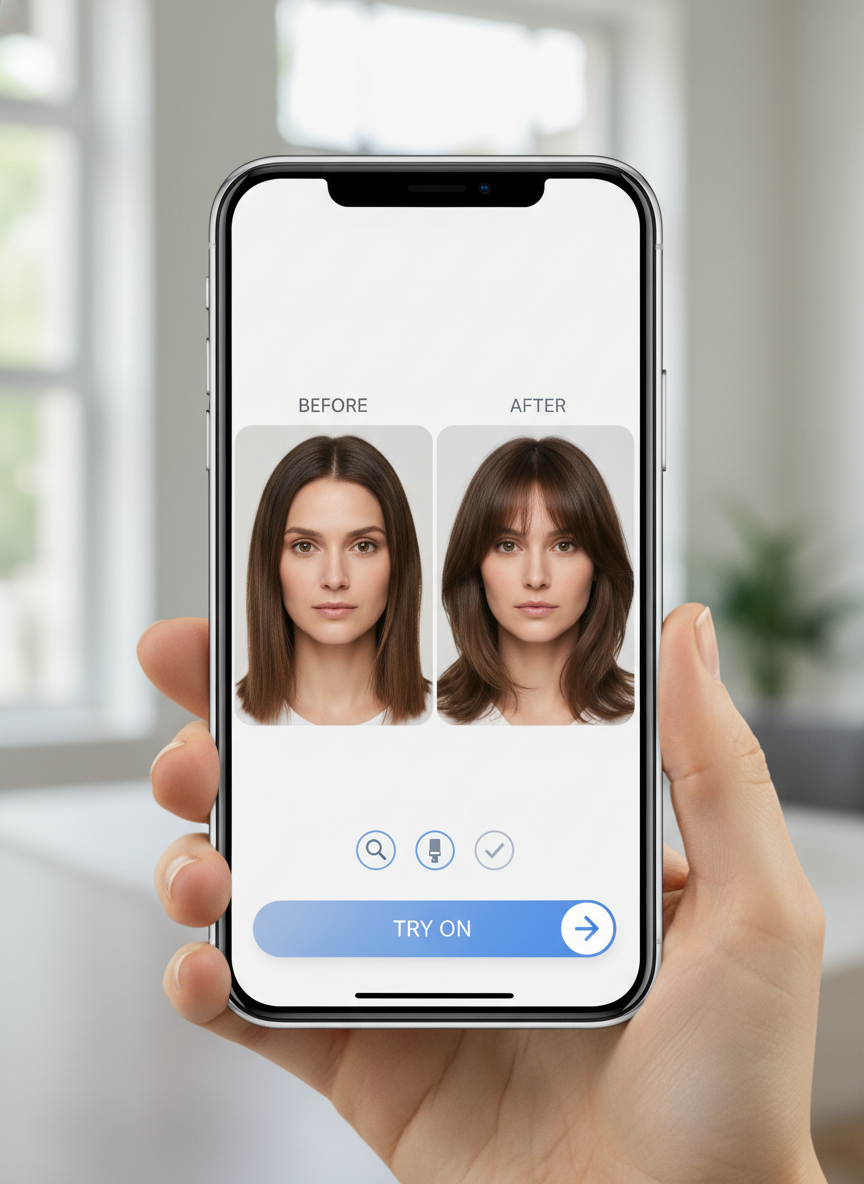
Curtain bangs change your face frame immediately. Upload a clear selfie and preview classic, long, wispy, layered, round-face, fine-hair, and bob-friendly curtain bangs on your own photo before cutting.
Upload Your Photo
Use a front-facing selfie with your forehead and full face visible so the AI can read your face shape.
Choose Curtain Bangs
Start with a curtain bangs preview, then compare classic, long, wispy, layered, or bob-friendly versions.
Generate Preview
Create an AI curtain bangs reference before booking a salon visit.
Save Your Favorite
Use the best preview as a stylist reference for length, part, and how softly the bangs blend.
Mistakes
Common Curtain Bangs Mistakes
Most curtain bang regrets come from unclear communication, the wrong length, or skipping daily styling. Avoid these common pitfalls before cutting.
- Asking for curtain bangs without specifying center, off-center, or side-swept parting.
- Cutting the bangs too short, which makes them flip out and lose the curtain shape.
- Skipping daily styling so the part does not form and the bangs sit as a heavy block.
- Pairing curtain bangs with a haircut that does not have face-framing layers, so the bangs do not blend.
- Forgetting about cowlicks, hairlines, or natural growth patterns that fight a clean part.
FAQ About Curtain Bangs
Related ideas
Related Bangs and Bob Ideas
Explore nearby bangs, layered, and bob ideas before choosing the curtain bangs version you want to preview. Each link stays inside the female hairstyle cluster.
Soft Bob
Pair a soft bob with curtain bangs for a face-framing, low-drama look.
Collarbone Lob
Keep more length with a collarbone-grazing lob and curtain bangs.
Butterfly Cut
Try long face-framing layers with movement around the face.
Butterfly Bob
Compare a layered, face-framing butterfly bob with bangs.
A-Line Bob
Try an A-line bob shape with curtain bangs for a soft angle.
AI Hairstyle Try-On
Upload a selfie and preview curtain bangs on your own photo.
Generate a Curtain Bangs Preview
Upload your photo and preview curtain bangs with TryHairNow AI before cutting. Compare classic, long, wispy, layered, round-face, fine-hair, and bob-friendly versions so your final reference is clearer.
- Private photo upload
- Fast AI hairstyle preview
Last updated: 2026-06-05 | Publisher: TryHairNow | AI hairstyle previews are reference images, not guaranteed salon outcomes. Bring reference photos to your stylist and confirm length, layer placement, hair density, and daily styling needs before cutting.